
Crack Filling and Sealing in Bloomer
Crack Filling and Sealing in Bloomer, Wisconsin.
Hot rubber crack filling for driveways and lots in Bloomer, before the freeze does the expensive part.
About 30 minutes north of Eau Claire. Free estimates, and a straight read on whether it needs doing yet.
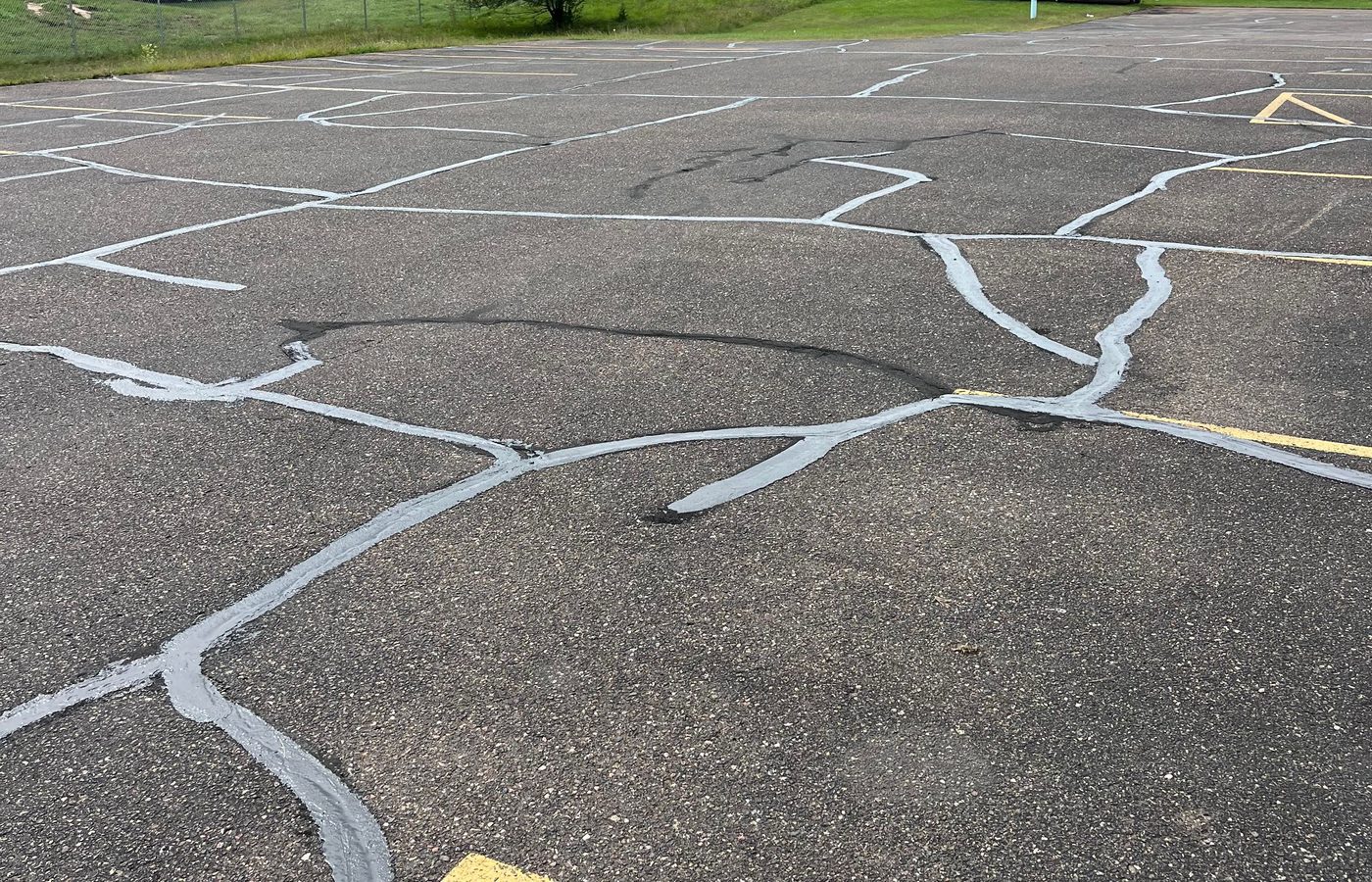
What a Crack Filling and Sealing Job Looks Like in Bloomer
There are two commercial zones and they behave differently. Main Street is the historic downtown, tight lots with shared access and on-street parking, where the jobs are small and access is tight.
The highway strip along Seventeenth and Nineteenth Avenue is the other one: modern retail, larger lots, purpose-built parking and room to work. Bloomer also carries real medical parking for a town this size, on more than one street, plus industrial ground on the edges. Those are the square-footage jobs.
Crack Filling and Sealing specifically in Bloomer
The spring thaw arrives about a week later here than in Eau Claire, which compresses the early-season window at the front end. Crack work booked in fall beats crack work waiting on a northern April. It also matters more on the middle-aged stock Bloomer has so much of: a drive from the seventies or eighties is usually still sound underneath, and hot rubber into the open cracks is what keeps it that way for another decade.
The Driveways and Lots in Bloomer
Bloomer sits north of Chippewa Falls where Highways 40 and 64 cross, the largest town in the northern half of the service area and the one most of the smaller places up there drive to.
Bloomer is the most evenly built town in the service area. No single decade carries it: about a third of the stock predates 1960, but nearly a quarter has gone up since 2000, and every decade in between is represented.
That matters more than it sounds. In a town built in one burst, the driveways all fail together and the advice is largely the same. In Bloomer the house next door can be thirty years older than yours, and what its drive needs isn't what yours needs. We quote them separately rather than by neighborhood.
Bloomer
We work the whole village rather than a named handful of neighborhoods.
Around Bloomer: Main Street, Highway 40 and 64 junction, Bloomer Middle School.
Standard 48-inch frost depth, and far enough north that spring opens a week later than it does in Eau Claire.
From our jobs
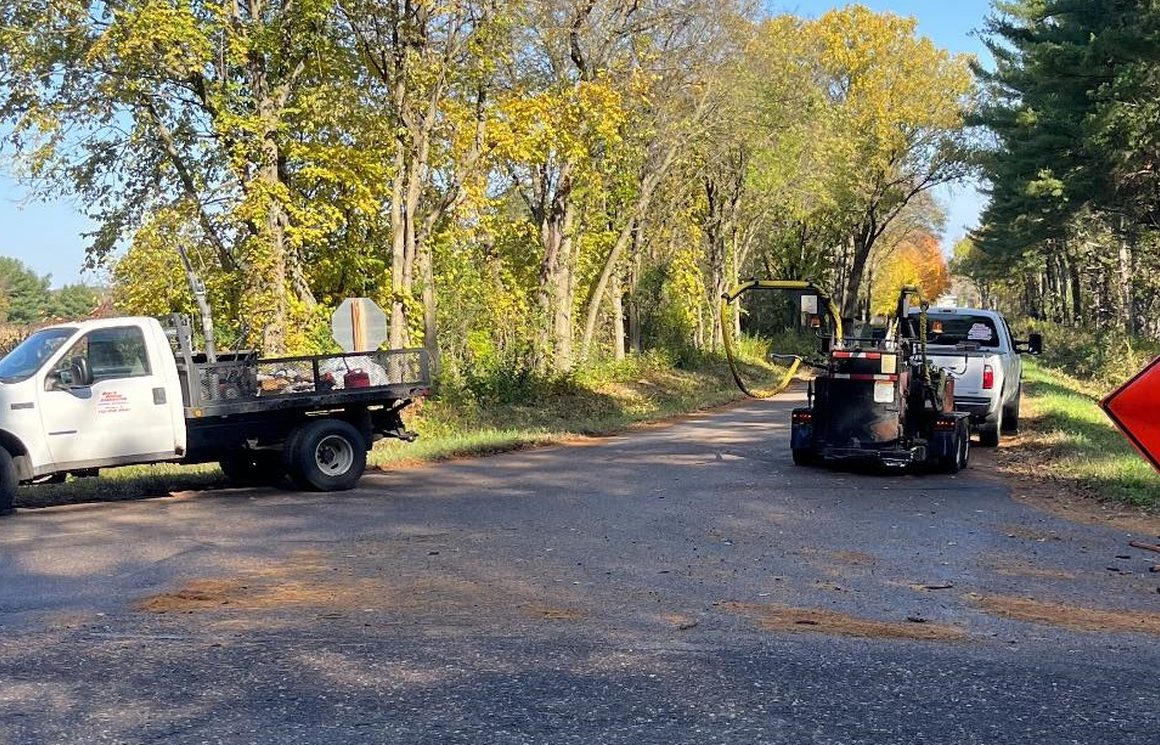
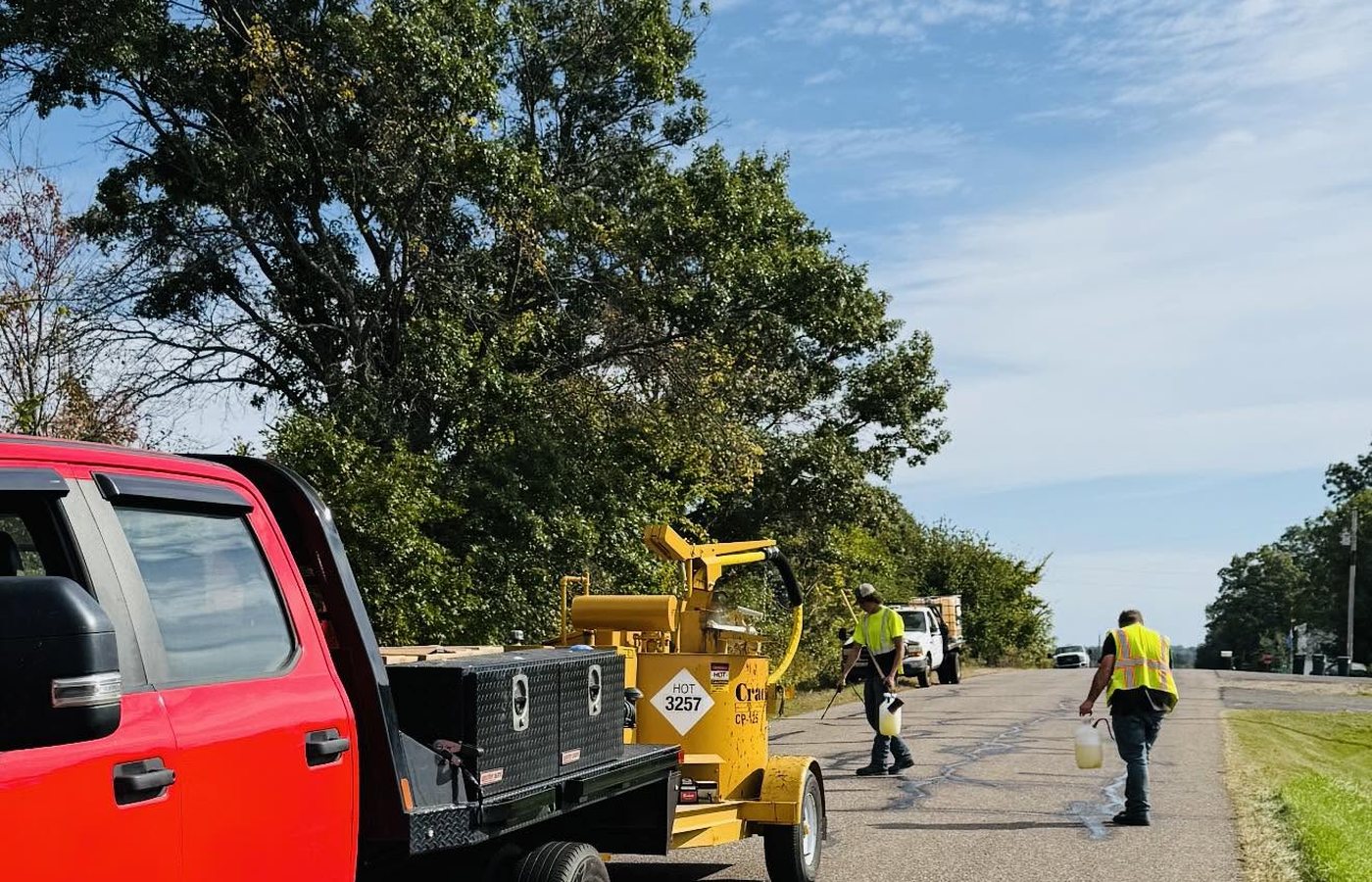
Job Photos
Hot rubber vs. cold pour
The stuff in a jug at the hardware store is cold pour. It goes in as a liquid, dries, shrinks, and sits in the crack like a rubber band laid in a trench. It's not bonded to anything. The first hard freeze pulls the crack open, the filler has nothing holding it to the walls, and it lifts out in a strip. Most people have seen this happen and assumed it was a bad batch. Hot-applied rubber goes in at around 400 degrees. At that temperature it's thin enough to run down into the crack instead of bridging it, and hot enough to melt into the asphalt faces on either side. When it cools it has bonded to the walls of the crack, so when the crack moves, the filler moves with it.
Cold pour
The jug from the hardware store, and what a cheap quote uses
- Sits in the crack rather than bonding to it
- Shrinks as it cures, leaving a channel down the middle
- Pulls out in strips after the first hard winter
- Cheap enough that it gets redone every year, which isn't cheap
Hot-applied rubber
What comes off our kettle
- Flows to the bottom of the crack at 400 degrees
- Melts into the asphalt faces and bonds to both walls
- Stays flexible, so it moves when the crack moves
- Holds for years, not for one season
This is the one place where the cheaper option isn't a smaller version of the right one. It's a different product doing a different thing.
What Decides the Price in Bloomer
Priced by the foot of crack, not by the area of the surface, because that's what actually drives the work. Usually done as part of a sealcoating job, where it costs less than it would on its own.
With a sealcoat job
Driveway
Measured on site
- Most driveways need some, and it's included up to a point
- Heavy cracking is quoted separately and said up front
Crack filling alone
Driveway, no sealcoat
Measured on site
- Worth doing on its own if the surface is otherwise sound
Commercial lot
Per linear foot
Measured on site
- Depends on crack width, depth and how much routing it needs
- Most lots are quoted as a lump sum after a walk
Cracks wider than about an inch and a half, or ones that have broken into a network, are past filling. Those get cut out and patched rather than filled with something that will not hold.
How the Work Goes in Bloomer
Done before sealer, always: sealer can't bridge an open crack.
Clean the crack out
Blown out with compressed air, vegetation and old failed filler removed. Rubber won't bond to dirt any more than sealer will.
Rout the wide ones
Wide or heavily worked cracks get cut to a consistent reservoir so the filler has a proper shape to sit in. Not every crack needs it; the ones that do are the ones that have already failed once.
Fill hot
Direct-fire kettle, rubber at 400 degrees, wanded into the crack until it's full from the bottom up rather than skinned over at the top.
Squeegee and let it set
Struck off flush or slightly banded over, depending on the surface. Sets hard enough to drive on in under an hour in most conditions.
Our neighbor got told their driveway was past sealing. Is ours?
When does the season actually start up here?
Can you work a Main Street lot without closing us for the day?
Is Bloomer far enough north that the drive costs us something?
How much does crack filling cost?
Why does the temperature of the crack filler matter?
Should I fill cracks before sealcoating or after?
Is there a crack too big to fill?
When is the best time of year for crack filling?
Get a Free Estimate in Bloomer
Tell us what it looks like and we'll come measure it. You get a written price before anything starts.
(715) 450-9897- Free on driveways and lots anywhere in the service area
- A photo of the problem helps, and it can go in the message
- Surfaces that are not ready yet get told so at the estimate
Get an estimate
Send the form and we'll call you back. The estimate is free.
Other Work We Do in Bloomer
- Sealcoating in Bloomer
- Asphalt Repair and Patching in Bloomer
- Catch Basin Repair in Bloomer
- Parking Lot Striping in Bloomer
- Track and Athletic Surfaces in Bloomer
- Concrete in Bloomer
- Asphalt Paving in Bloomer
- Commercial Snow Removal in Bloomer
Crack Filling and Sealing in Nearby Towns
- Crack Filling and Sealing in Chippewa Falls
- Crack Filling and Sealing in Colfax
- Crack Filling and Sealing in Lake Hallie
- Crack Filling and Sealing in Chetek
- Crack Filling and Sealing in Cornell
- Crack Filling and Sealing in Elk Mound
Everything about crack filling and sealing, including how the work goes and what changes the price