
Concrete in Cornell
Concrete in Cornell, Wisconsin.
Concrete flatwork, aprons and curb in Cornell. Commercial pours go down at 4,500 PSI with tied rebar, priced and scheduled with the asphalt.
About 45 minutes north of Eau Claire. Free estimates, and a straight read on whether it needs doing yet.
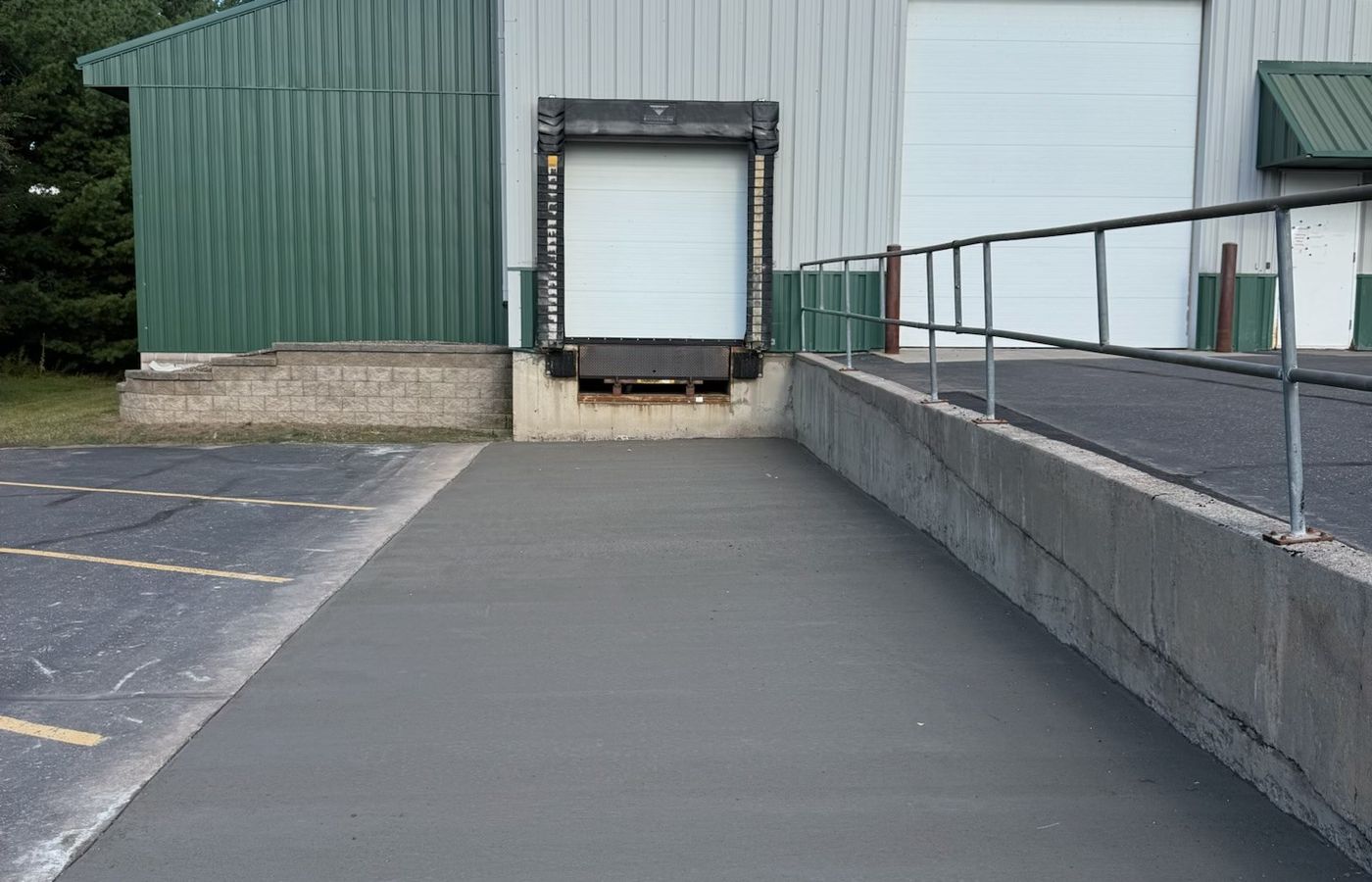
What a Concrete Job Looks Like in Cornell
Cornell has two commercial corridors rather than one, and they do different jobs.
Main Street is retail and civic: city hall, the bank, the pharmacy, the hardware store, the newspaper. Small frontages and shared access. Bridge Street carries the larger footprints: the mill, the grocery, the fuel stop, and the middle and high school.
Then Industrial Park Road, which for a village this size is a genuine industrial street. A truss plant and a cabinet works sit on it, both with real truck movements and the surface wear that comes with turning loaded trailers on the same radius every day. That's a different repair from anything residential.
Concrete specifically in Cornell
Aprons and pads at the industrial park, where the loading is genuine. In the village core it's mostly sidewalk and garage aprons on old stock, where the concrete and the asphalt have been moving apart for decades.
The Driveways and Lots in Cornell
Cornell sits on the Chippewa River upstream of Lake Wissota, where Highways 64 and 27 meet and the Scenic River Road up from Chippewa Falls ends. The country around it is glacial: rolling forested moraine, kettle ponds, eskers and kames left by the Chippewa Lobe. Brunet Island State Park sits at the north end of Park Road where the Fisher River joins the Chippewa.
A mill town, and the housing follows the mill. The compact grid either side of Main and Bridge Streets is largely older stock built for people who walked to work, which means narrow lots, short drives and tight turns beside the house.
That shape matters more than the age does. A short drive with no margin between the asphalt and the lawn takes hand cutting on both edges rather than a spray wand, and we price that in rather than discovering it on the day.
Cornell
We work the whole village rather than a named handful of neighborhoods.
Around Cornell: Cornell Pulpwood Stacker, Mill Yard Park, Brunet Island State Park, Old Abe State Trail, Brunet Falls Park.
This far north the season runs a little shorter at both ends. Standard 48-inch frost depth, and the glacial ground drains unevenly: sand in one spot and till a few feet away, which is why settlement here's often local rather than general.
From our jobs
Job Photos
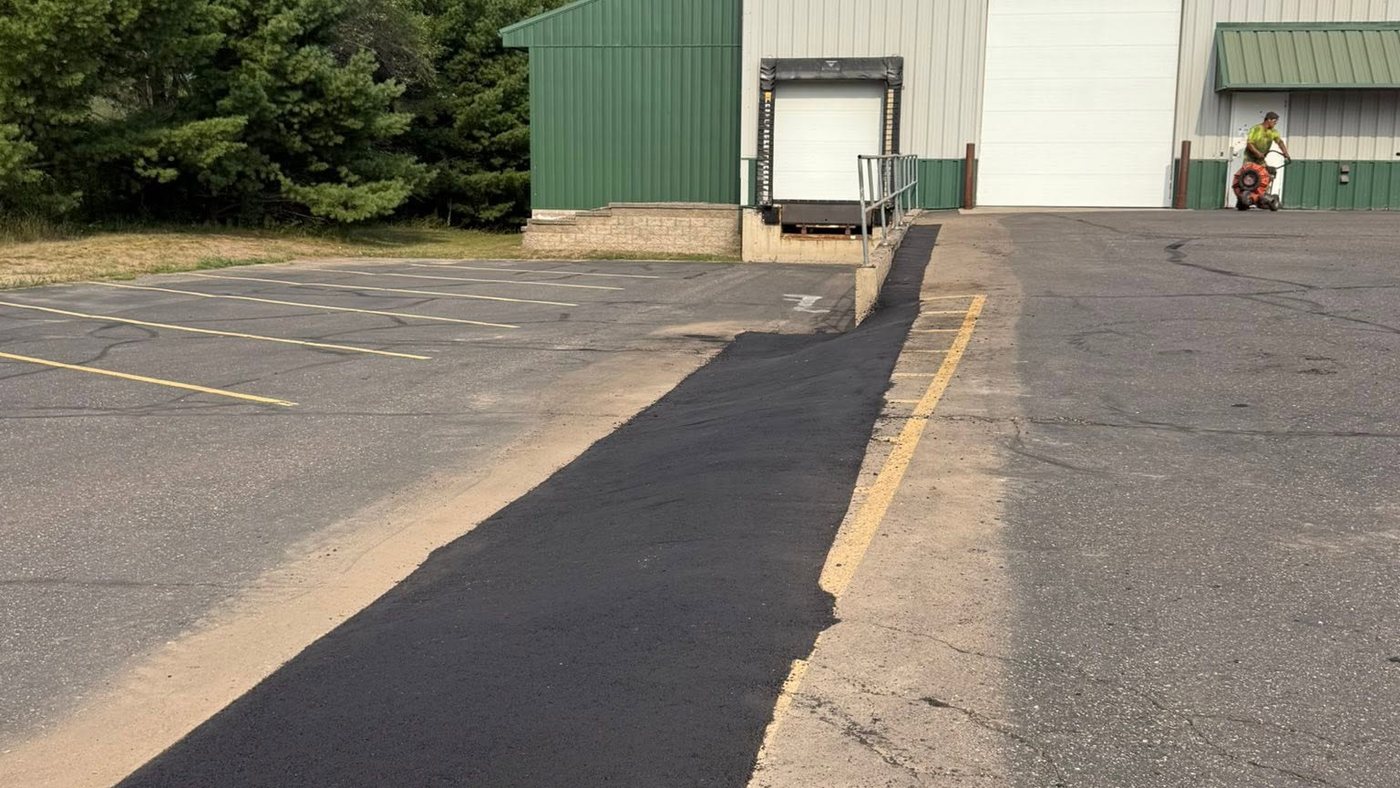
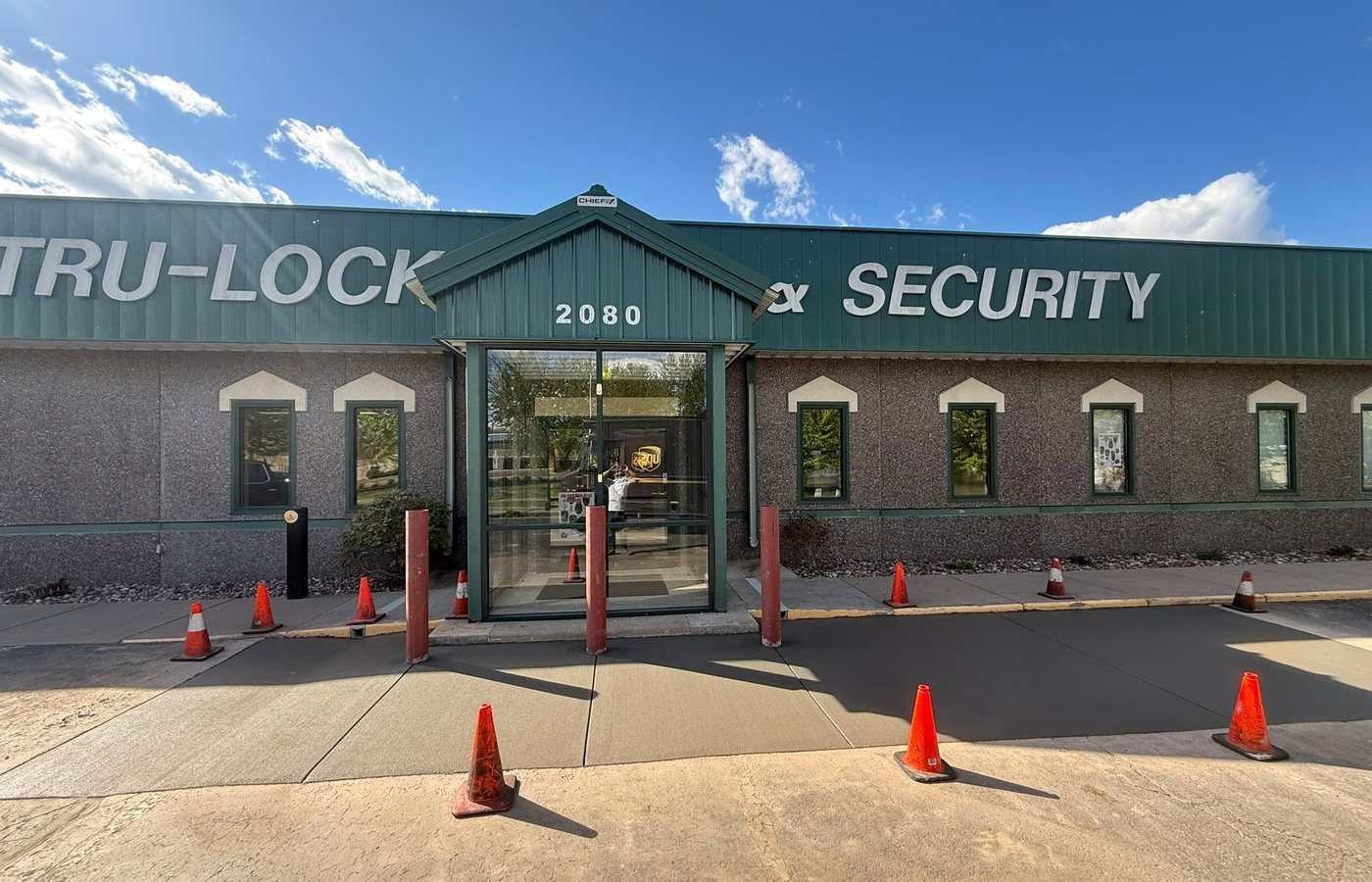
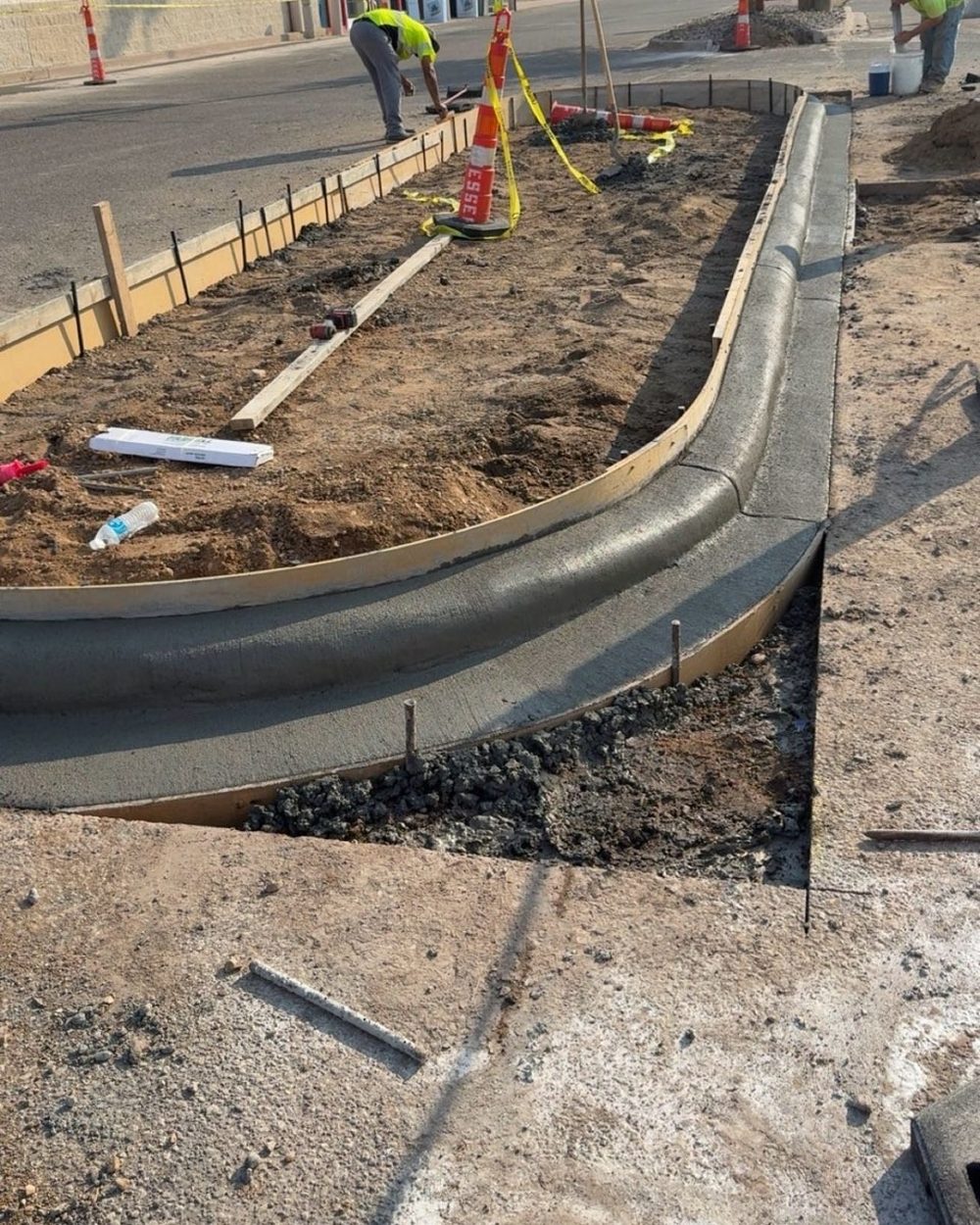
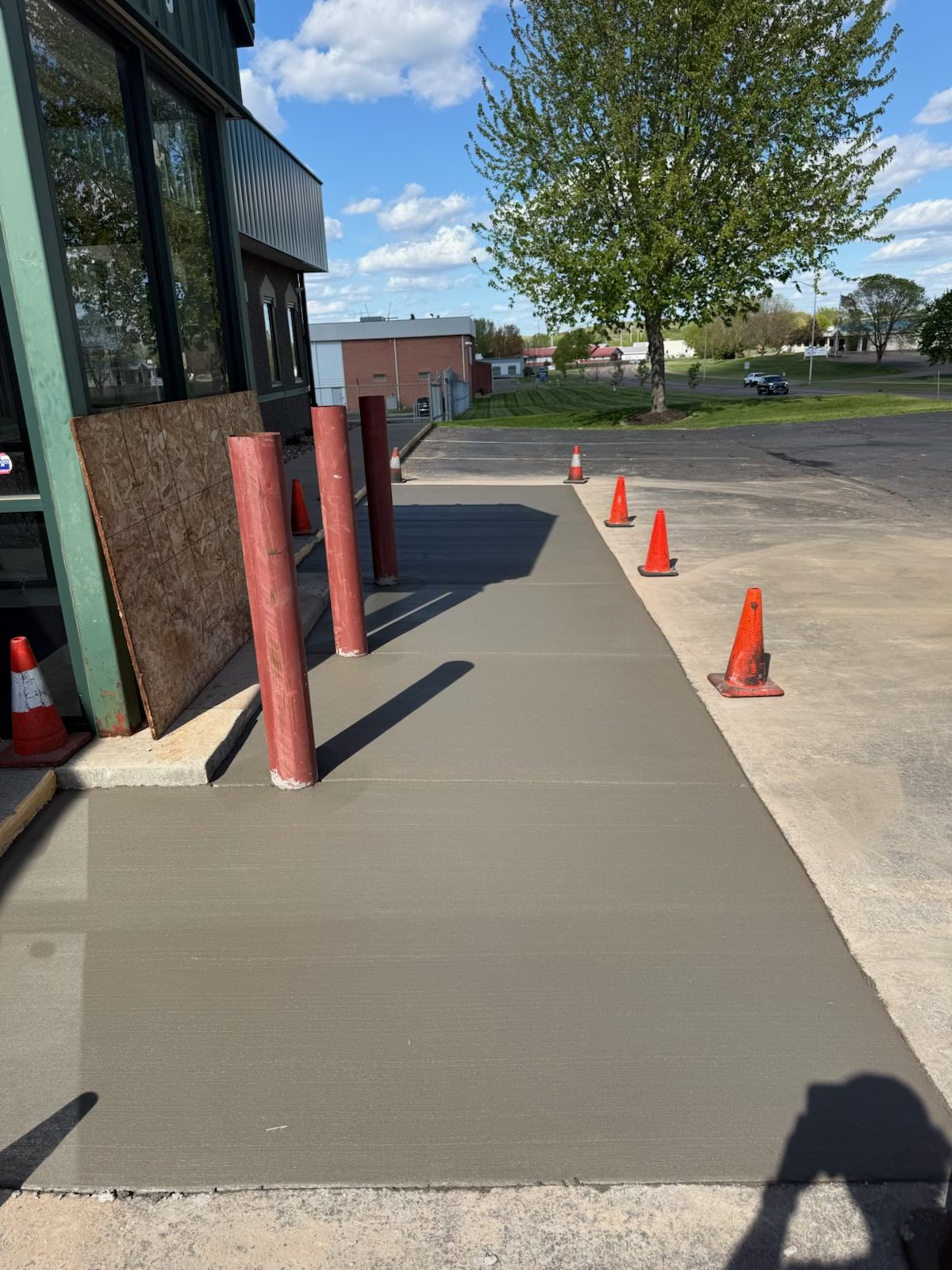
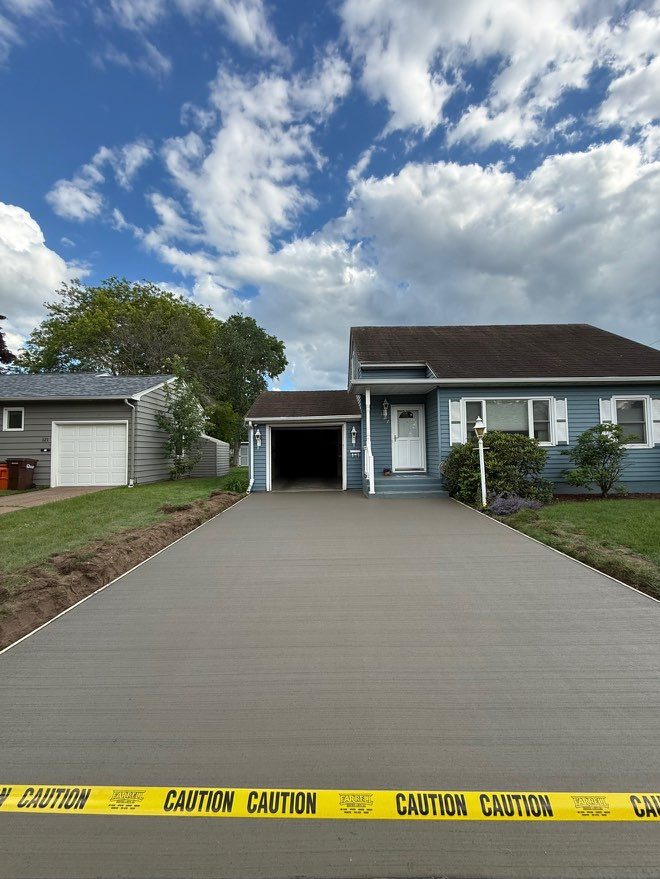
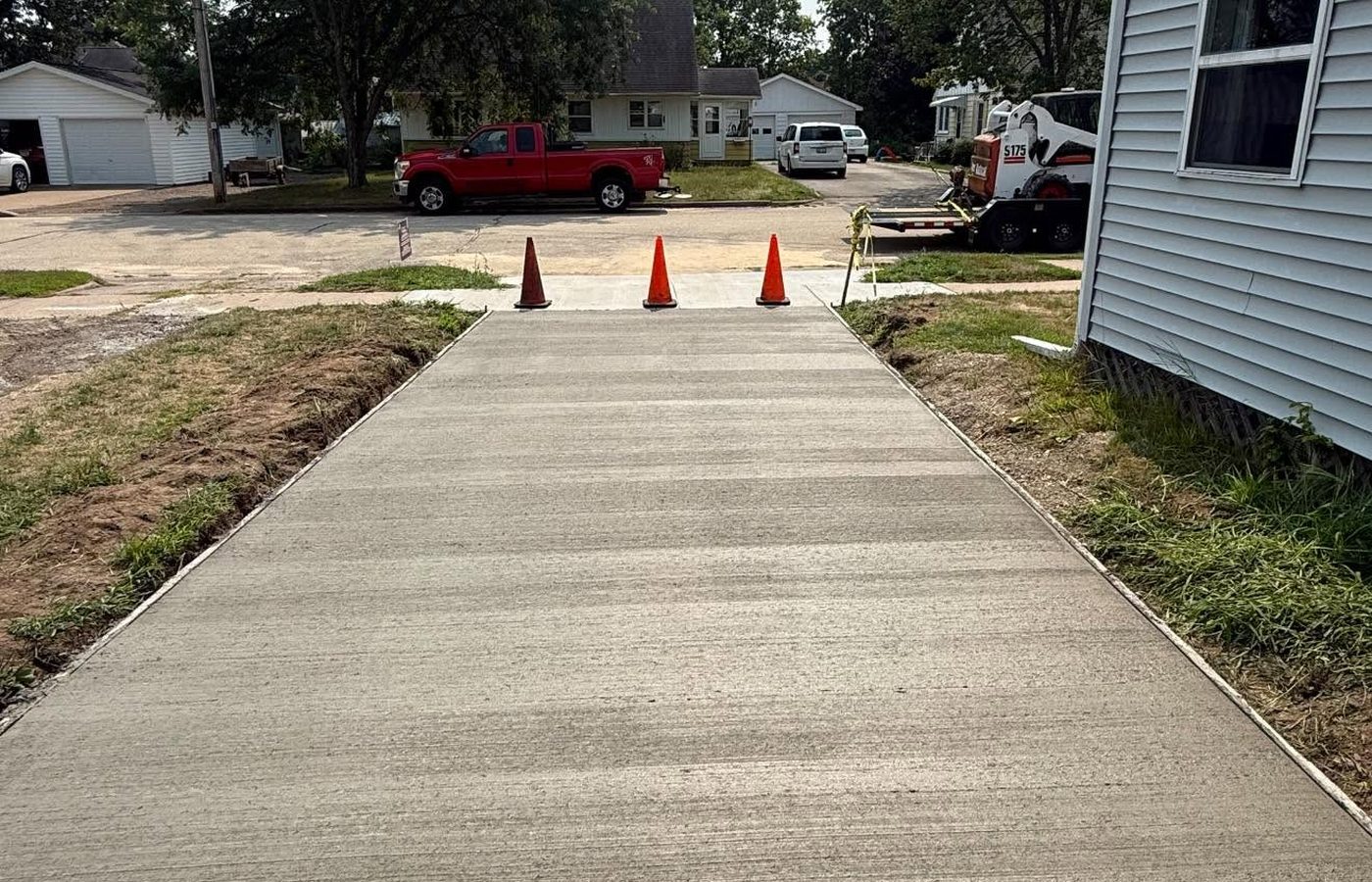
The joint between concrete and asphalt
Concrete and asphalt move differently. Concrete is rigid and moves at its joints; asphalt is flexible and moves everywhere. Where they meet, that difference has to be absorbed, and if it's not, the joint opens. Once it's open, water goes straight into the base under both of them. This is why so many lots fail first at the dock apron, the dumpster pad and the garage apron. Not because those slabs were bad, but because two different the line where they met was nobody's. We pour the concrete and lay the asphalt against it, so that joint belongs to the job.
What Decides the Price in Cornell
Flatwork prices per square foot and is easy to quote from measurements. Structural work like curb or a dock apron is quoted per project, because the forming is most of the labor and it doesn't scale with area.
Residential flatwork
Driveways, sidewalks, patios
Measured on site
- Per square foot, broom finish, base prepared
- Removal of the old surface priced separately
Garage or dock apron
Per project
Measured on site
- Thicker slab, tied rebar, asphalt tied back in
Dumpster pad
Per pad
Measured on site
- Heavy slab, because a loaded truck on a hot day is the worst case
- Sized to the truck, not to the dumpster
Curb and gutter
Per linear foot
Measured on site
- Straight run at the low end, radius work at the high end
What moves it: thickness, reinforcement, how much has to come out first, access for a truck, and whether the asphalt around it needs tying back in. Removal and haulaway is a real line and gets quoted rather than buried.
How the Work Goes in Cornell
Base, forms, steel, pour, finish, and the asphalt keyed back in against it.
Take out what's there
Broken slab out and hauled away, down to whatever the new pour needs to sit on.
Prepare and compact the base
Graded and compacted. Concrete poured on soft ground cracks on a schedule set by the ground, not by the concrete.
Form and reinforce
Formed to grade so water runs where it should, and reinforced where the span and the loading call for it. Radius forms for curb work.
Pour and finish
Placed, screeded, floated and broom finished. Control joints cut where the slab is going to crack, so that it cracks there instead of somewhere visible.
Tie the asphalt back in
The step most concrete contractors leave to somebody else. Asphalt keyed to the new edge, compacted, joint sealed.
Cornell is a fair way out. Do you actually come up here?
Our drive is short and narrow with the house right beside it. Is that a problem?
Do you work the Industrial Park Road properties, or only driveways?
How much does a concrete driveway cost?
Concrete or asphalt for a driveway?
Do you do curb and gutter?
Why do dumpster pads fail so often?
How long before we can use new concrete?
Do you subcontract the concrete out?
Get a Free Estimate in Cornell
Tell us what it looks like and we'll come measure it. You get a written price before anything starts.
(715) 450-9897- Free on driveways and lots anywhere in the service area
- A photo of the problem helps, and it can go in the message
- Surfaces that are not ready yet get told so at the estimate
Get an estimate
Send the form and we'll call you back. The estimate is free.
Other Work We Do in Cornell
- Sealcoating in Cornell
- Crack Filling and Sealing in Cornell
- Asphalt Repair and Patching in Cornell
- Catch Basin Repair in Cornell
- Parking Lot Striping in Cornell
- Track and Athletic Surfaces in Cornell
- Asphalt Paving in Cornell
- Commercial Snow Removal in Cornell
Concrete in Nearby Towns
- Concrete in Cadott
- Concrete in Bloomer
- Concrete in Stanley
- Concrete in Chippewa Falls
- Concrete in Lake Hallie
- Concrete in Chetek
Everything about concrete, including how the work goes and what changes the price