
Asphalt Repair and Patching in Cornell
Asphalt Repair and Patching in Cornell, Wisconsin.
Pothole, patch and sinkhole repair in Cornell, cut back to sound material and rebuilt properly.
About 45 minutes north of Eau Claire. Free estimates, and a straight read on whether it needs doing yet.
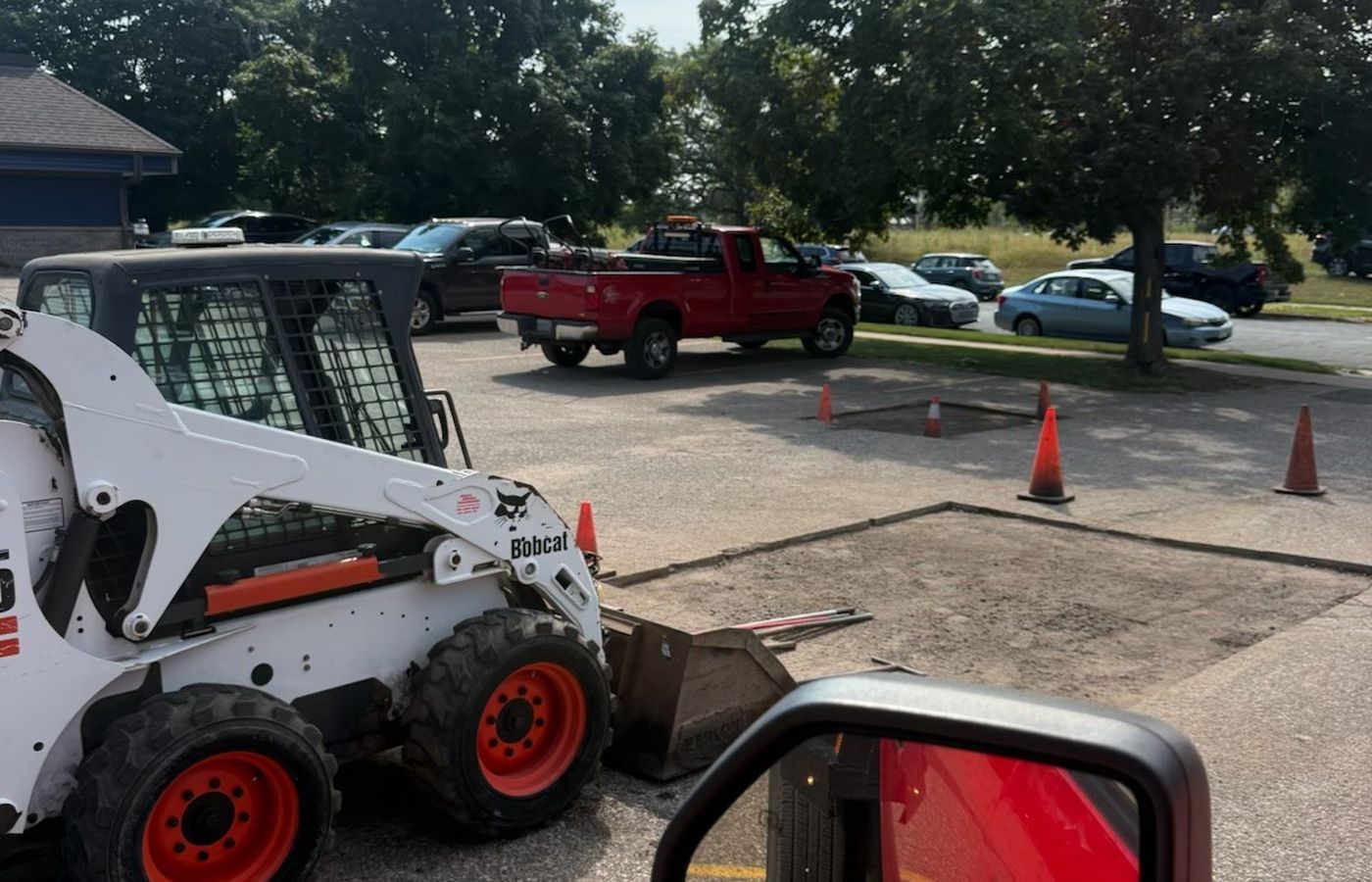
What an Asphalt Repair and Patching Job Looks Like in Cornell
Cornell has two commercial corridors rather than one, and they do different jobs.
Main Street is retail and civic: city hall, the bank, the pharmacy, the hardware store, the newspaper. Small frontages and shared access. Bridge Street carries the larger footprints: the mill, the grocery, the fuel stop, and the middle and high school.
Then Industrial Park Road, which for a village this size is a genuine industrial street. A truss plant and a cabinet works sit on it, both with real truck movements and the surface wear that comes with turning loaded trailers on the same radius every day. That's a different repair from anything residential.
Asphalt Repair and Patching specifically in Cornell
Industrial Park Road is where the real repair work is. Loaded trailers turning on the same radius every day rut and break the edge, which is a full-depth cut and rebuild rather than a patch.
The Driveways and Lots in Cornell
Cornell sits on the Chippewa River upstream of Lake Wissota, where Highways 64 and 27 meet and the Scenic River Road up from Chippewa Falls ends. The country around it is glacial: rolling forested moraine, kettle ponds, eskers and kames left by the Chippewa Lobe. Brunet Island State Park sits at the north end of Park Road where the Fisher River joins the Chippewa.
A mill town, and the housing follows the mill. The compact grid either side of Main and Bridge Streets is largely older stock built for people who walked to work, which means narrow lots, short drives and tight turns beside the house.
That shape matters more than the age does. A short drive with no margin between the asphalt and the lawn takes hand cutting on both edges rather than a spray wand, and we price that in rather than discovering it on the day.
Cornell
We work the whole village rather than a named handful of neighborhoods.
Around Cornell: Cornell Pulpwood Stacker, Mill Yard Park, Brunet Island State Park, Old Abe State Trail, Brunet Falls Park.
This far north the season runs a little shorter at both ends. Standard 48-inch frost depth, and the glacial ground drains unevenly: sand in one spot and till a few feet away, which is why settlement here's often local rather than general.
From our jobs
Job Photos
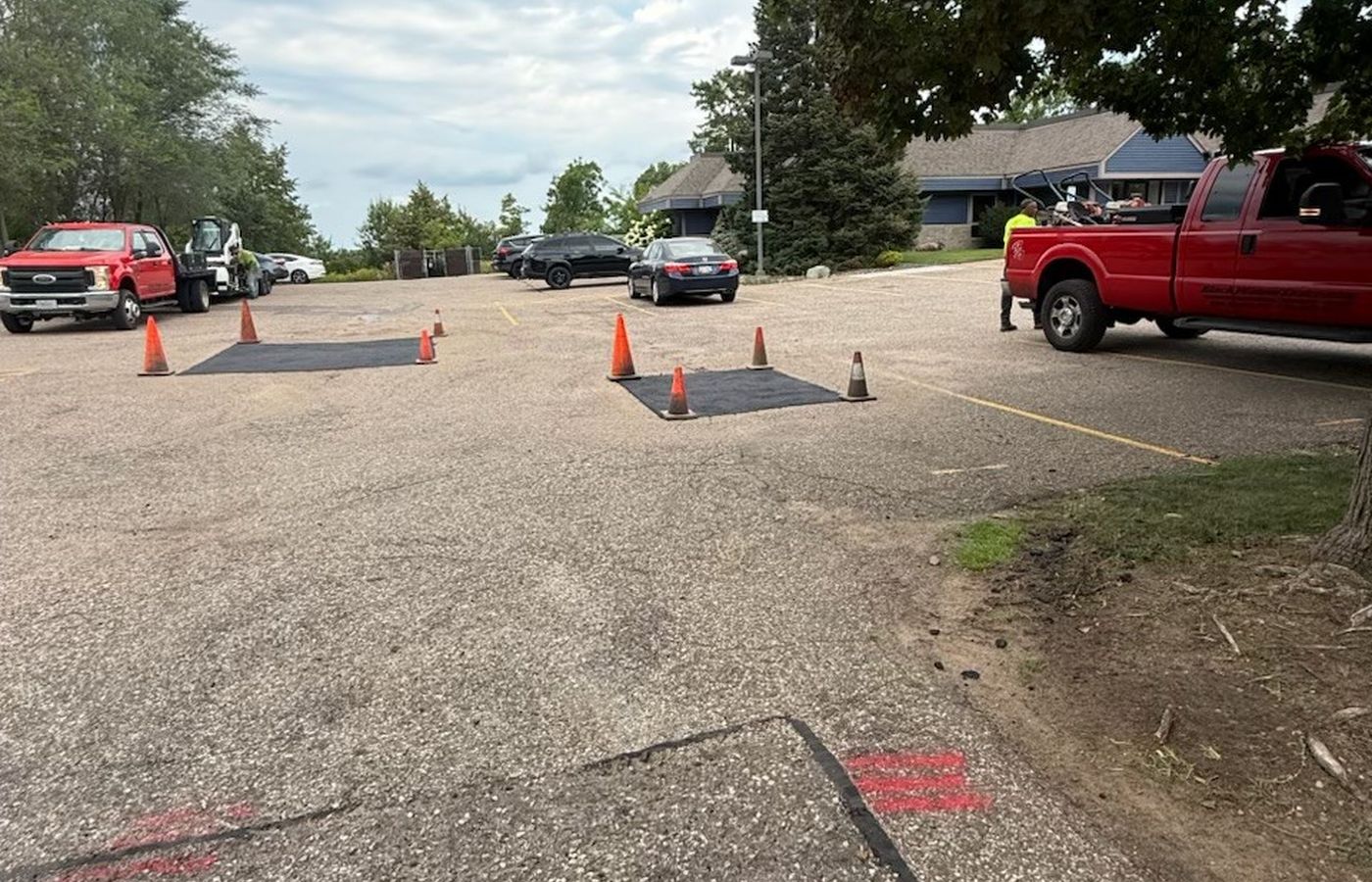
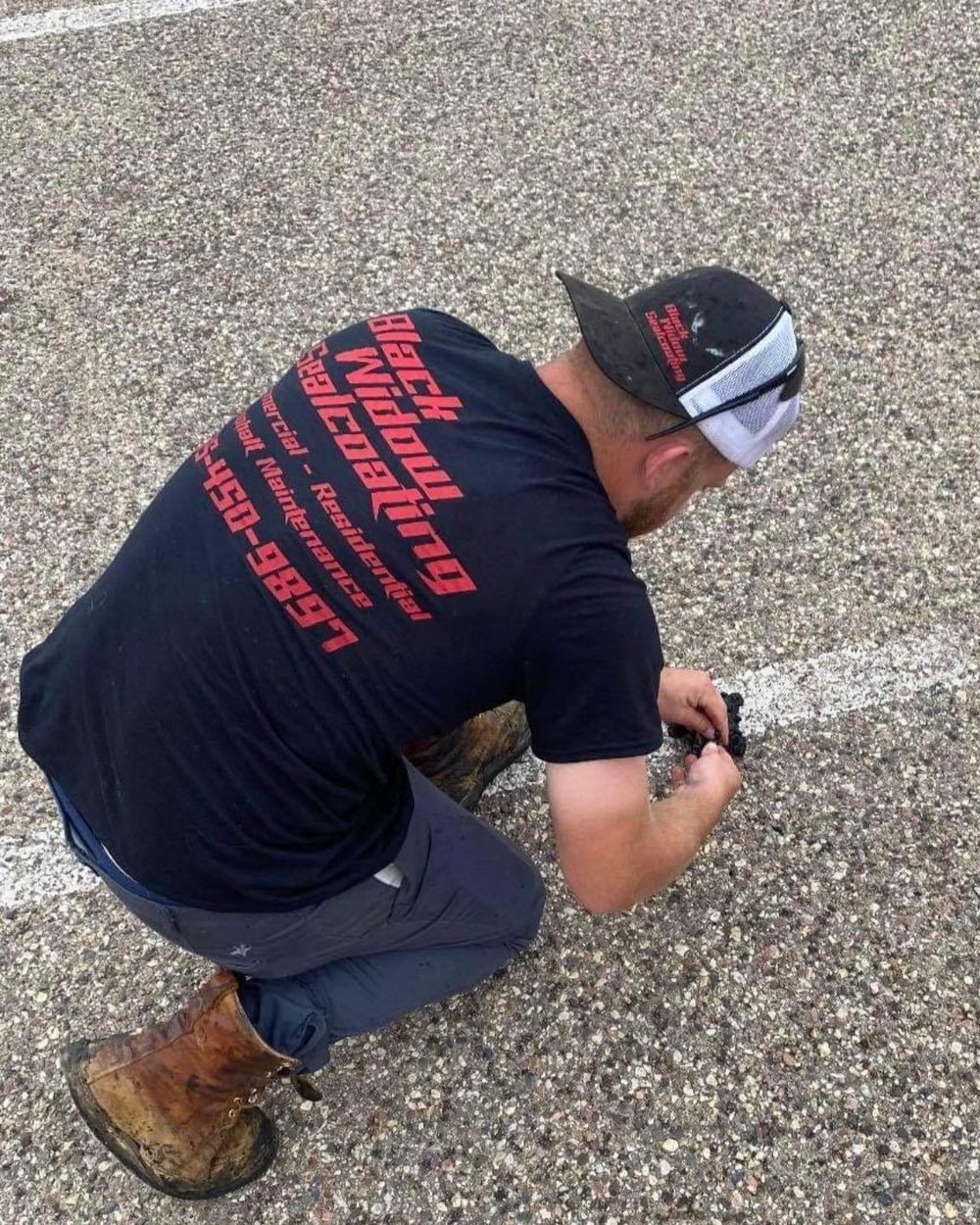
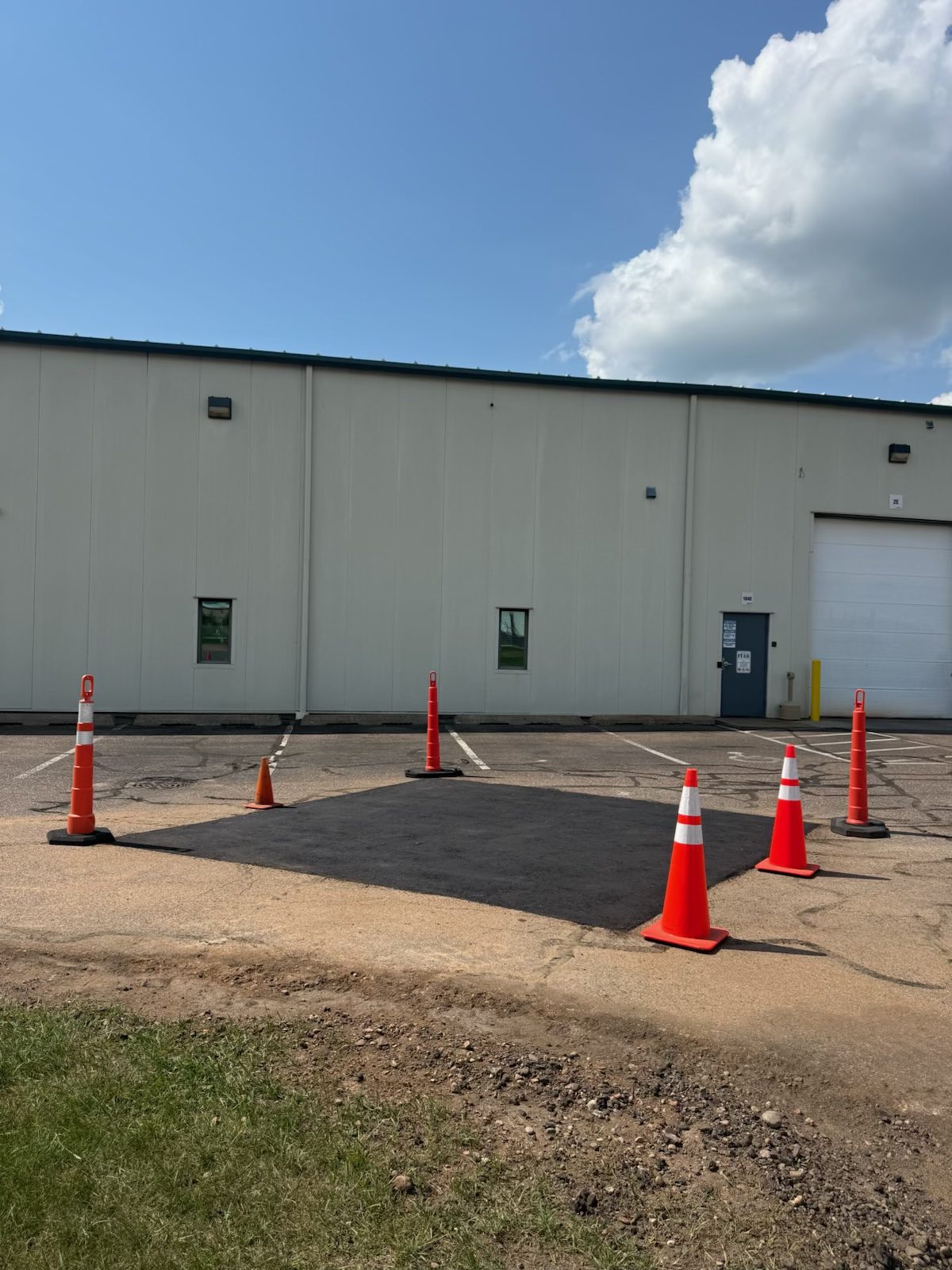
Filled vs. repaired
The pothole that comes back every spring is being filled rather than repaired. Cold patch is a temporary measure and an honest one when it's sold as that: it's loose material tamped into a hole, with no bond to the sides and nothing done about the failed base underneath. It gets you through a winter. A real repair means cutting a clean square back to material that's still sound, taking out everything soft below it, putting the base back and compacting it in lifts, then laying hot asphalt and rolling it. The patch ends up stronger than what is around it, which is why the failure doesn't come back through the middle of it.
Filled
The quick version
- Cold patch tamped into the hole as found
- Ragged edges, so there's nothing to key against
- Failed base left in place
- Back within a season, usually wider
Repaired
What we do
- Saw cut to clean vertical edges, back to sound asphalt
- Soft material dug out until the bottom is firm
- Base replaced and compacted in lifts
- Hot mix laid, rolled, and the joint sealed
Cold patch has its place: it's the right call in February when nothing else can be done. It's the wrong call in July.
What Decides the Price in Cornell
Repairs are priced by area and by how deep the trouble goes, and the depth isn't knowable until it's open. These are the bands most jobs land in.
Single pothole
Up to a few square feet
Measured on site
- Saw cut, dig out, base, hot mix, compact
- Cheaper alongside other work
Failed area or apron
Roughly 50 to 300 sq ft
Measured on site
- The common commercial repair, and the garage apron at home
- Priced per square foot once the area is measured
Sinkhole or subgrade failure
Depth unknown until opened
Measured on site
- Often a drainage or utility problem underneath
- Assessed and quoted before the machine moves
Several repairs on one visit come down substantially per repair, because getting the machine and the crew on site is most of the cost of a small one. If you have three, have them all looked at.
Repair or repave?
Most lots that get deferred don't need repaving.
What we look at before quoting either one.
- Two or three potholes, the rest of the surface is soundStraightforward patching. Nowhere near needing an overlay. Repairable
- The garage apron has sunk where it meets the concreteCommon and fixable. Usually settlement under the transition, cut out and rebuilt. Repairable
- Cracked into squares in a few areas, sound elsewhereCut those areas out full depth, patch, then seal the whole surface. Repairable
- That squared cracking across most of the lotThe base has gone broadly. Patching it becomes a rolling cost with no end. An overlay or a rebuild is the answer. Needs replacement
- Water sits in the same spot after every rainGrade or drainage, and it has to be solved before any surface work, or the new surface fails in exactly the same place. Depends, send a photo
Photos of the worst two areas are usually enough for us to tell you which it is.
How the Work Goes in Cornell
Same method on a driveway apron and on a loading dock approach.
Find the edge of the failure
The visible hole is smaller than the damage. We sound out where the surface is still supported and cut outside that, not around the hole.
Saw cut square, clean vertical faces
A patch keyed against a clean edge stays. A patch feathered against a ragged one fails at the joint, which is why so many patches fail in a ring.
Dig out to something firm
Everything soft comes out. If the bottom is wet, that's a drainage problem and the best patch in the world won't last sitting on water.
Base back in, compacted in lifts
Compacted in layers rather than dumped and rolled once. This is the invisible step that decides whether the repair lasts two years or twenty.
Hot mix, rolled, joint sealed
Laid to the surrounding grade so water still runs where it's supposed to, compacted, and the perimeter joint sealed against the next freeze.
Cornell is a fair way out. Do you actually come up here?
Our drive is short and narrow with the house right beside it. Is that a problem?
One spot on our driveway has sunk and the rest is fine. Why just there?
Do you work the Industrial Park Road properties, or only driveways?
How much does pothole repair cost?
Why does my patch keep failing?
Can you repair a sinkhole in a driveway or lot?
Is it cheaper to repair the asphalt or repave it?
How soon can we drive on a new asphalt patch?
Get a Free Estimate in Cornell
Tell us what it looks like and we'll come measure it. You get a written price before anything starts.
(715) 450-9897- Free on driveways and lots anywhere in the service area
- A photo of the problem helps, and it can go in the message
- Surfaces that are not ready yet get told so at the estimate
Get an estimate
Send the form and we'll call you back. The estimate is free.
Other Work We Do in Cornell
- Sealcoating in Cornell
- Crack Filling and Sealing in Cornell
- Catch Basin Repair in Cornell
- Parking Lot Striping in Cornell
- Track and Athletic Surfaces in Cornell
- Concrete in Cornell
- Asphalt Paving in Cornell
- Commercial Snow Removal in Cornell
Asphalt Repair and Patching in Nearby Towns
- Asphalt Repair and Patching in Cadott
- Asphalt Repair and Patching in Bloomer
- Asphalt Repair and Patching in Stanley
- Asphalt Repair and Patching in Chippewa Falls
- Asphalt Repair and Patching in Lake Hallie
- Asphalt Repair and Patching in Chetek
Everything about asphalt repair and patching, including how the work goes and what changes the price