
Sealcoating in Strum
Sealcoating in Strum, Wisconsin.
Driveway and parking lot sealcoating in Strum. The same prep on every job, and a straight read on whether yours needs doing this year at all.
About 25 minutes southeast of Eau Claire. Free estimates, and a straight read on whether it needs doing yet.
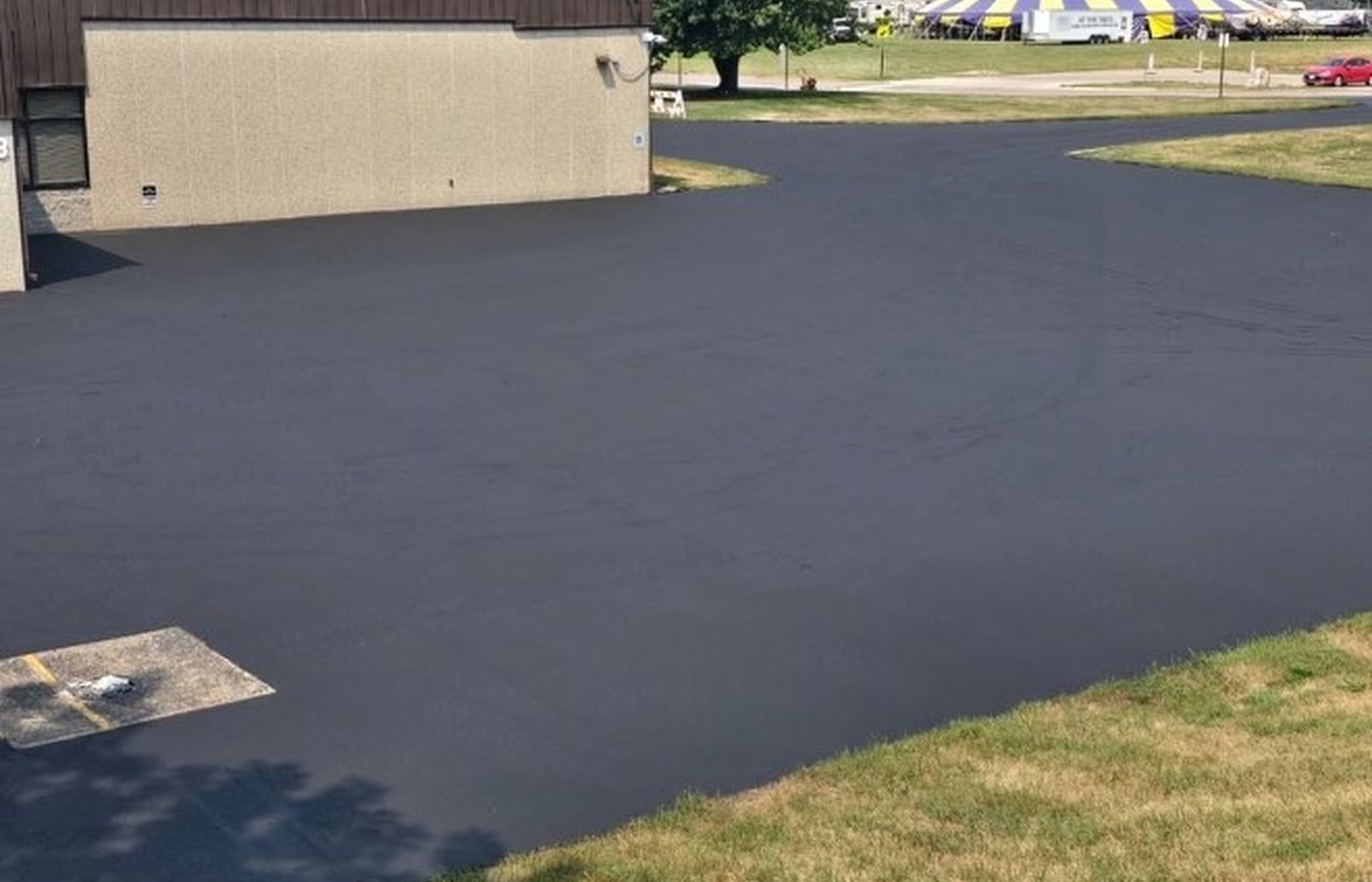
What a Sealcoating Job Looks Like in Strum
For a village this size Strum has an unusual amount of commercial surface, and it's spread across five streets rather than concentrated on one.
Fifth Avenue North is the retail spine: the grocery, the bank, the post office, the dentist, and the telephone cooperative that serves twenty-five communities from a building here. Fifth Avenue South carries the village hall and the library. Maple Street is where the industry actually is, a millwork plant and the co-op agronomy site, and it's worth naming precisely because Strum has no industrial park to point at.
The largest single parking demand in the village is the school campus on Highway 10. Eleva-Strum consolidated into one building here, so elementary, middle and high all share one site, and any work on it happens inside the summer window or not at all.
Sealcoating specifically in Strum
Short drives on the village grid and much longer ones as soon as you're out of it, so Strum jobs vary more in size than the population suggests. The seasonal surfaces out at Crystal Lake are best sealed either side of the season, not during it.
The Driveways and Lots in Strum
Strum sits on the Buffalo River in Trempealeau County with Crystal Lake on its edge and US Highway 10 running through as the main route. The Buffalo River State Trail, thirty-six miles of old railroad corridor between Mondovi and Fairchild, passes through the village. Rolling hills in open farm country, and unusually for this area, unglaciated ground.
A village of about 1,100 on a compact grid, with the older stock close to Fifth Avenue and newer building out toward Crystal Lake. Drives are short in the core and get considerably longer as soon as you leave it.
The Crystal Lake end is its own thing. A campground and a golf course sit out on Crystal Lake Drive, and the surfaces there are seasonal: heavy use for five months and empty for the rest, which wears differently from a driveway used every day of the year.
Strum
We work the whole village rather than a named handful of neighborhoods.
Around Strum: Crystal Lake, Woodland Park, Crystal Lake Park, Buffalo River State Trail, Buffalo River.
Standard 48-inch frost depth. The important local difference is that Trempealeau County is unglaciated, so instead of the sorted sand and gravel outwash we work in up the Chippewa valley, the subgrade here's residual soil over bedrock. It holds water differently, and a drive that ponds in Strum is usually telling you something about grade rather than about drainage.
From our jobs
Job Photos
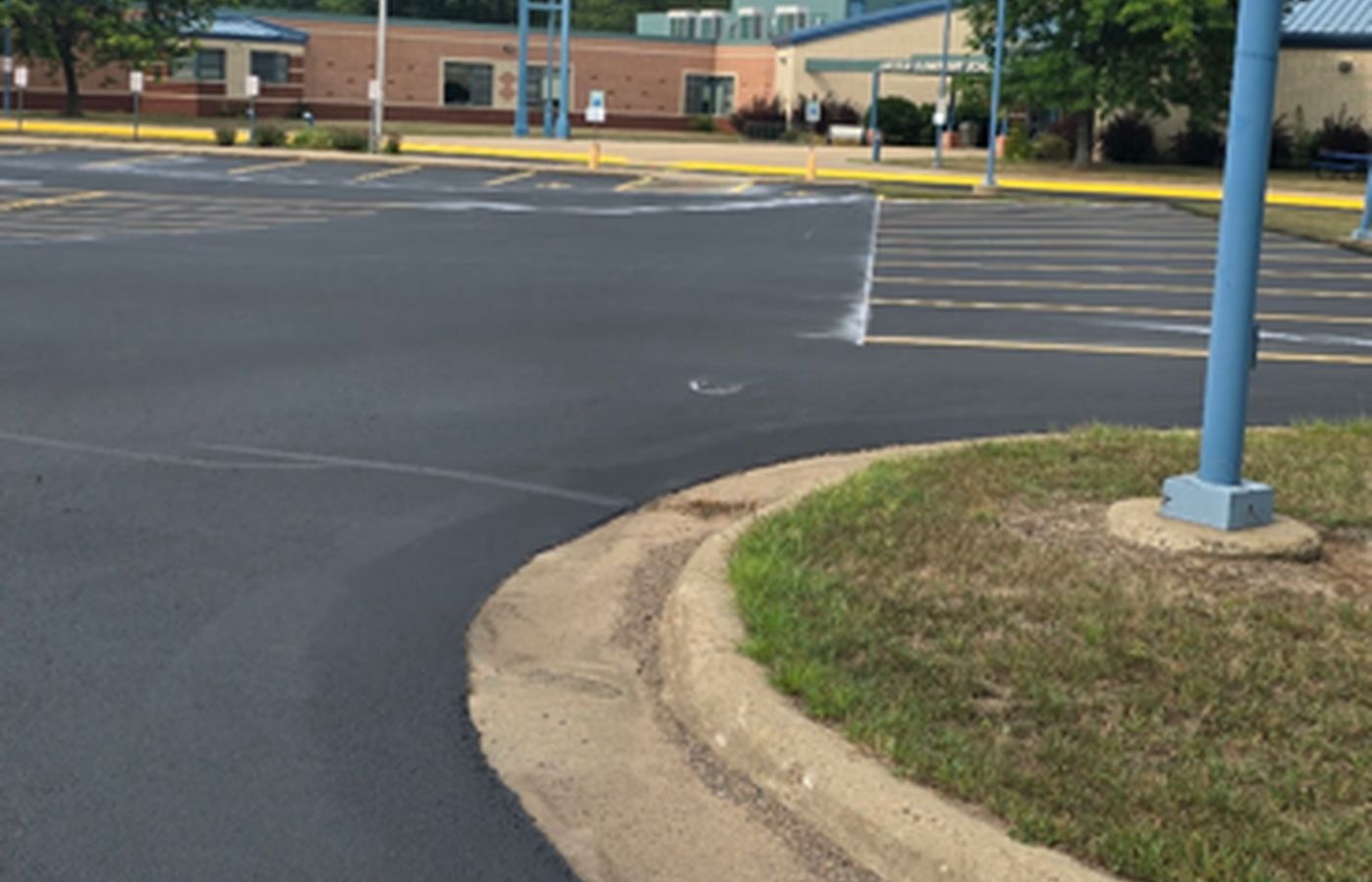
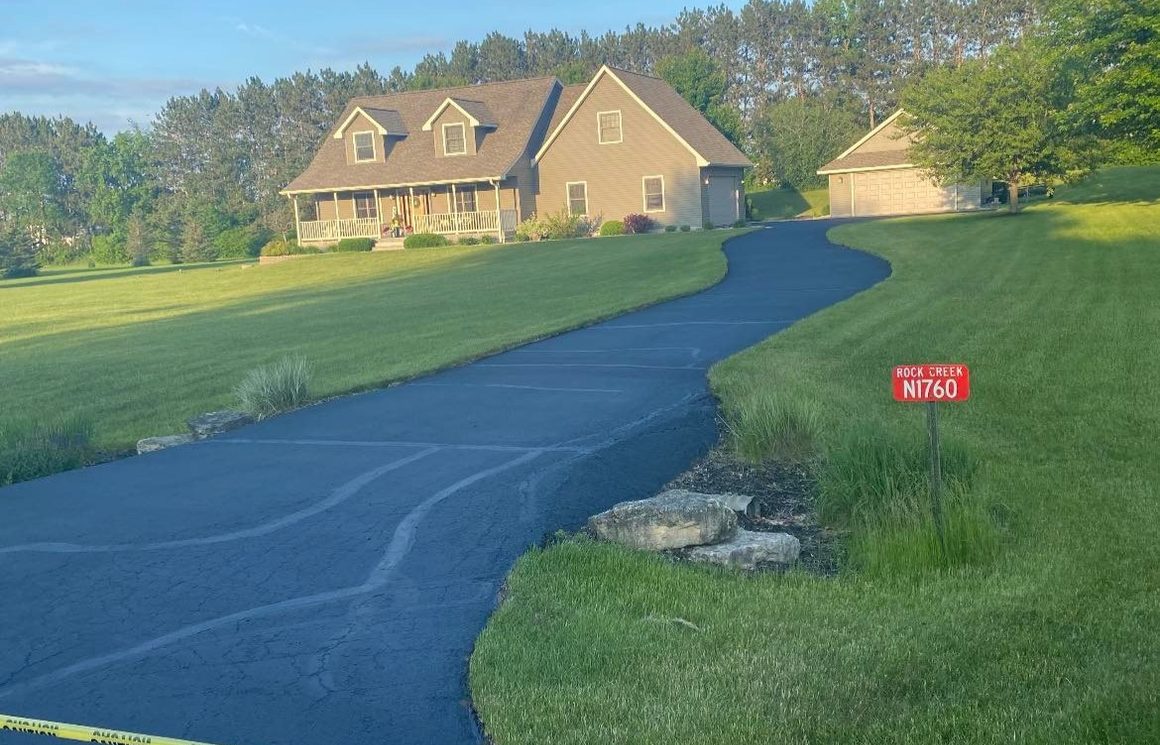
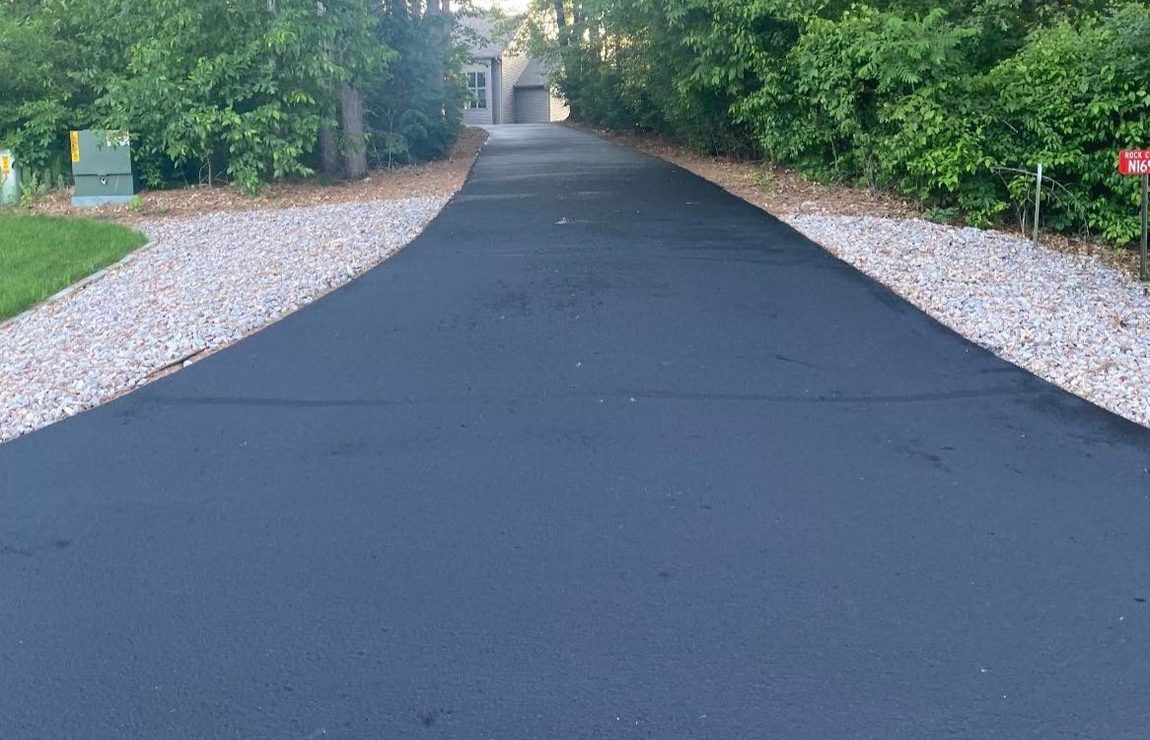
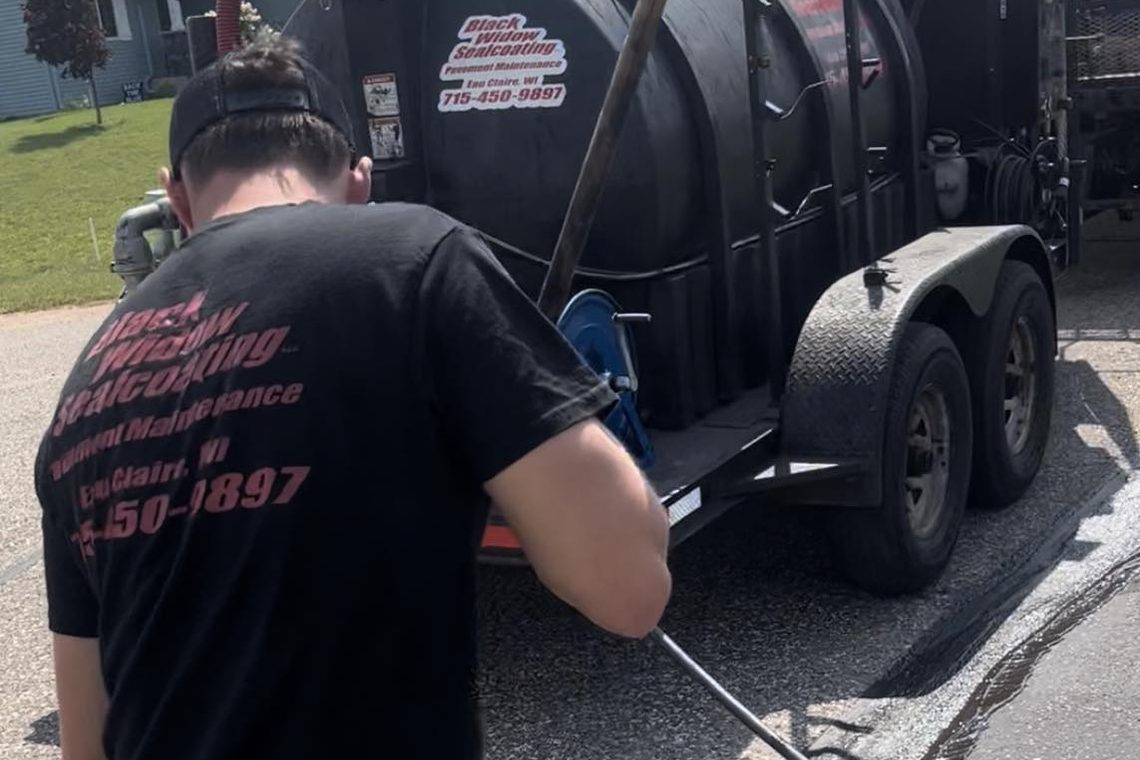
What makes a seal job last
Sealer doesn't stick to dirt. It doesn't stick to oil, it doesn't bridge an open crack, and it doesn't cure in the cold. Almost every failed driveway in this valley failed for one of those four reasons, and all four happen before the sealer ever comes off the truck. Which is why the part of this job that matters is the part that happens before anything looks different.
The cheap job
What a low bid usually buys
- Blown off, maybe, and sealed straight over whatever is left
- Cracks sprayed across rather than filled, so water still gets under
- Sealer thinned with water to stretch the drum further
- One thin coat, sprayed to the edges, apron included
- Looks excellent for about six weeks
What we do
And why each step is there
- Blown clean and edged, and oil spots primed so sealer can bond
- Cracks over a quarter inch filled with hot rubber first
- Sealer mixed to the manufacturer's spec, with the sand it calls for
- Edges and aprons cut in by hand, two coats where traffic warrants
- Left to cure properly, with the drive-on time in writing
The difference doesn't show on the day. It shows in the second spring.
What Decides the Price in Strum
Residential sealcoating runs about $0.15 to $0.25 per square foot, the rate Black Widow has published for years. Everything else is measured rather than guessed at, and your number is fixed before work starts.
Two-car driveway
Roughly 600 to 900 sq ft
Measured on site
- Clean, crack fill, one to two coats
- Most in-town driveways
Larger or rural driveway
Roughly 900 to 2,000 sq ft
Measured on site
- The common case out in the townships
- Long drives are measured, not estimated by eye
Small commercial lot
Roughly 8,000 to 20,000 sq ft
Measured on site
- Church, clinic, small retail
- Crack sealing usually included
Larger lot
20,000 sq ft and up
Measured on site
- Quoted after a walk
- Striping and patching priced separately
What moves it: how much crack filling it needs, whether there are areas that have to be cut out and patched first, how much hand cutting the edges take, and access. Anything we find that changes the number gets said before we start, not after.
Does yours actually need sealing?
How we read a surface before quoting it
Some surfaces that look bad are fine, and some that look fine are not.
- It has gone gray and chalky but it's smoothTextbook case. That's the wear layer gone and exactly what sealer replaces. Repairable
- Thin cracks running with the drive, under a quarter inchSeal them now and they stay cheap. Left open, water gets under and freezes. Repairable
- It was paved last year and still looks blackNew asphalt needs to cure before its first seal, usually 6 to 12 months. Too early is a real thing and we would rather book you for next season. Depends, send a photo
- Cracked into squares, like dried mud, and it flexes underfootThat's the base failing, not the surface. Sealing it hides the problem for one season and wastes your money. Those areas get cut out and patched. Needs replacement
- Potholes, or a low spot that holds water after rainRepair first, seal after. Standing water is usually a grade or a drainage problem and it'll take the new sealer with it. Needs replacement
- Loose stone comes up when you scuff it with your shoeRaveling. Early on, sealer locks it back down. Advanced, it needs an overlay. This is the one worth having us look at rather than guessing. Depends, send a photo
Not sure which one you have? Send a photo of the worst area.
How the Work Goes in Strum
The same six steps on a driveway and on a 40,000 square foot lot.
We look at it and price it
Free, and on site for anything commercial. If the surface has gone past what sealer can help, we say so then rather than taking the job.
Clean and prep
Blown down, edges trimmed back where grass has crept in, oil and fuel spots primed. Sealer won't bond to any of those, and skipping this is the single most common reason a job fails early.
Crack filling, hot
Anything over about a quarter inch gets direct-fire rubber at 400 degrees, which flows into the crack and bonds to its walls. Cold pourable filler sits on top and pulls away by the second winter.
Cut in by hand
Edges, garage aprons, around drains and islands. Hand work, because a spray wand at the edge either misses it or covers your concrete.
Sealcoat, twice on high-wear areas
Turnarounds, entrances and drive lanes wear faster than the rest and get two. The rest of the lot gets one, because a second coat there adds no life.
Cure time, in writing
Usually 24 hours before a car and 48 before anything heavy or before turning the wheels while stopped. It depends on the temperature and humidity that afternoon, so we give you the real number on the day.
We run a seasonal business out at Crystal Lake. When should the lot be done?
Is Strum inside your area for a single driveway?
The campground surface only gets used five months. Does it still need sealing?
Does the ground here really behave differently to Eau Claire?
How much does it cost to sealcoat a driveway?
How often should a driveway be sealed?
How late in the year can you seal?
How long before I can drive on a freshly sealed driveway?
Do you use coal tar?
Can you seal a lot without closing it?
My driveway is cracked everywhere. Is sealing still worth it?
Get a Free Estimate in Strum
Tell us what it looks like and we'll come measure it. You get a written price before anything starts.
(715) 450-9897- Free on driveways and lots anywhere in the service area
- A photo of the problem helps, and it can go in the message
- Surfaces that are not ready yet get told so at the estimate
Get an estimate
Send the form and we'll call you back. The estimate is free.
Other Work We Do in Strum
- Crack Filling and Sealing in Strum
- Asphalt Repair and Patching in Strum
- Catch Basin Repair in Strum
- Parking Lot Striping in Strum
- Track and Athletic Surfaces in Strum
- Concrete in Strum
- Asphalt Paving in Strum
- Commercial Snow Removal in Strum
Sealcoating in Nearby Towns
- Sealcoating in Osseo
- Sealcoating in Mondovi
- Sealcoating in Augusta
- Sealcoating in Fall Creek
- Sealcoating in Altoona
- Sealcoating in Eau Claire
Everything about sealcoating, including how the work goes and what changes the price