
Catch Basin Repair in Augusta
Catch Basin Repair in Augusta, Wisconsin.
Catch basin repair and rebuild for commercial lots in Augusta. Cut back, rebuilt, the frame reset to grade and the asphalt keyed back in.
About 25 minutes southeast of Eau Claire on Highway 12. Free estimates, and a straight read on whether it needs doing yet.
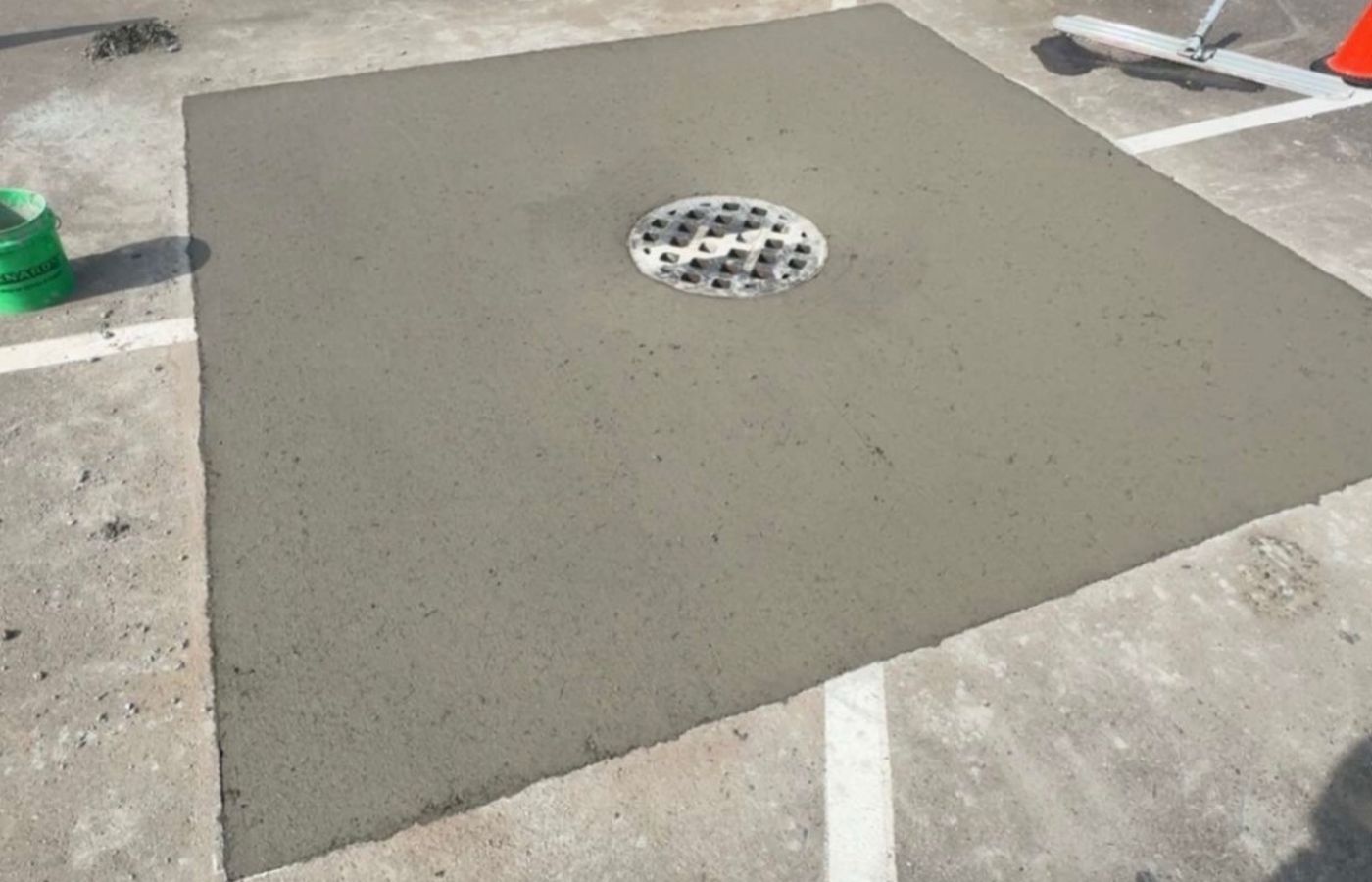
What a Catch Basin Repair Job Looks Like in Augusta
Lincoln Street is the commercial spine, carrying Highway 12 east and west through town, with the bank, the hardware store, the pharmacy, the clinic and most of the food and drink strung along it. Stone Street is the secondary cluster.
Industrial Drive at the west end is where the square footage is. Augusta has a genuine industrial base for a town of 1,567, including the plant where Bush's baked beans were first made, and that's loading dock and truck yard surface rather than parking lot. It fails differently and it gets specified differently.
Catch Basin Repair specifically in Augusta
Wet ground and old structures is the combination that produces sinking basins, and Augusta has both. Catching one while the frame is only settling keeps it a repair instead of a rebuild. Once the bedding under a structure has started to wash out, patching the ring of asphalt around the rim buys a season and no more, because what moved was never the asphalt.
The Driveways and Lots in Augusta
Augusta sits in southeastern Eau Claire County where Highway 12 runs east and Highway 27 crosses it, about ten miles north of the interstate. Bridge Creek and Diamond Valley Creek run through town, both trout water, which is a nicer way of saying there's more groundwater under this town than under most.
Augusta has the oldest building profile of any town in the southern half of the service area. A third of its houses were built before 1940, more than three quarters before 1980, and just seven units went up in the entire 2010s.
So the honest starting question here is rarely what color sealer. It's whether the drive under it's still worth protecting. On a good number of Augusta drives it very much is, because a well-built old surface outlasts a badly built new one. On others the base gave out years ago and no coating changes that.
Augusta
We work the whole village rather than a named handful of neighborhoods.
Around Augusta: Lincoln Street, Dells Mill, Augusta Wildlife Area.
Standard 48-inch frost depth, with more shallow groundwater than the norm because of the two creeks. Wet subgrade heaves harder than dry subgrade does.
From our jobs
Job Photos
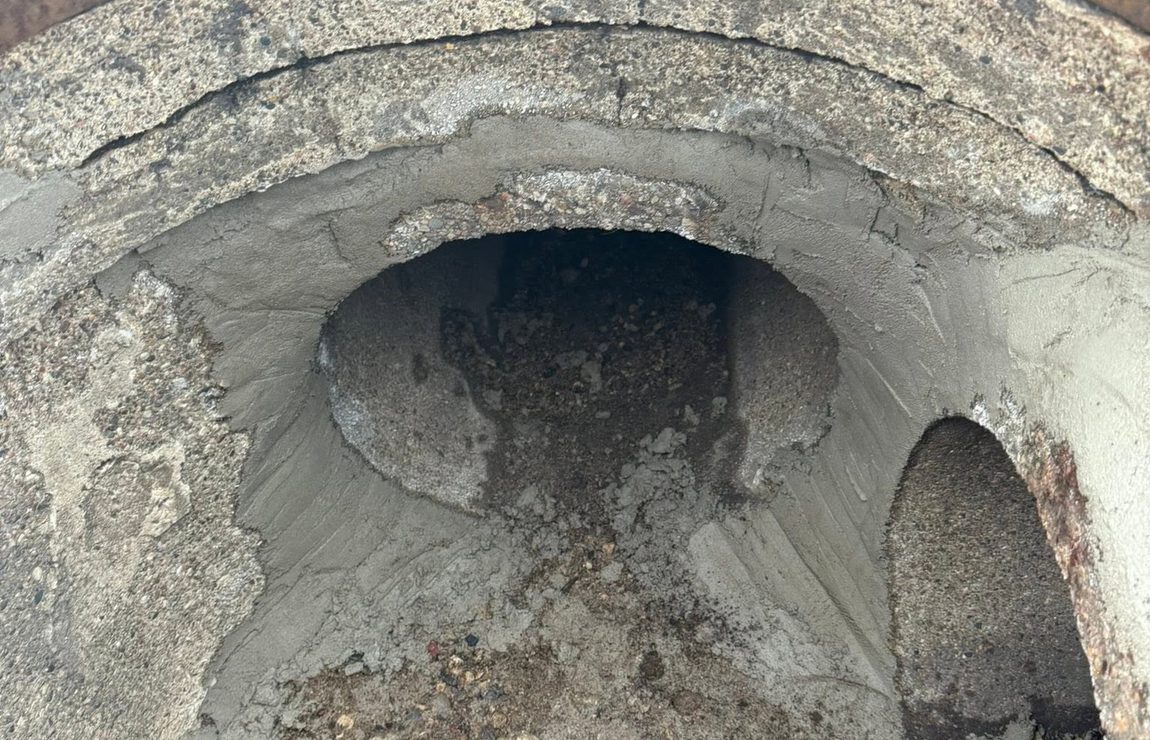
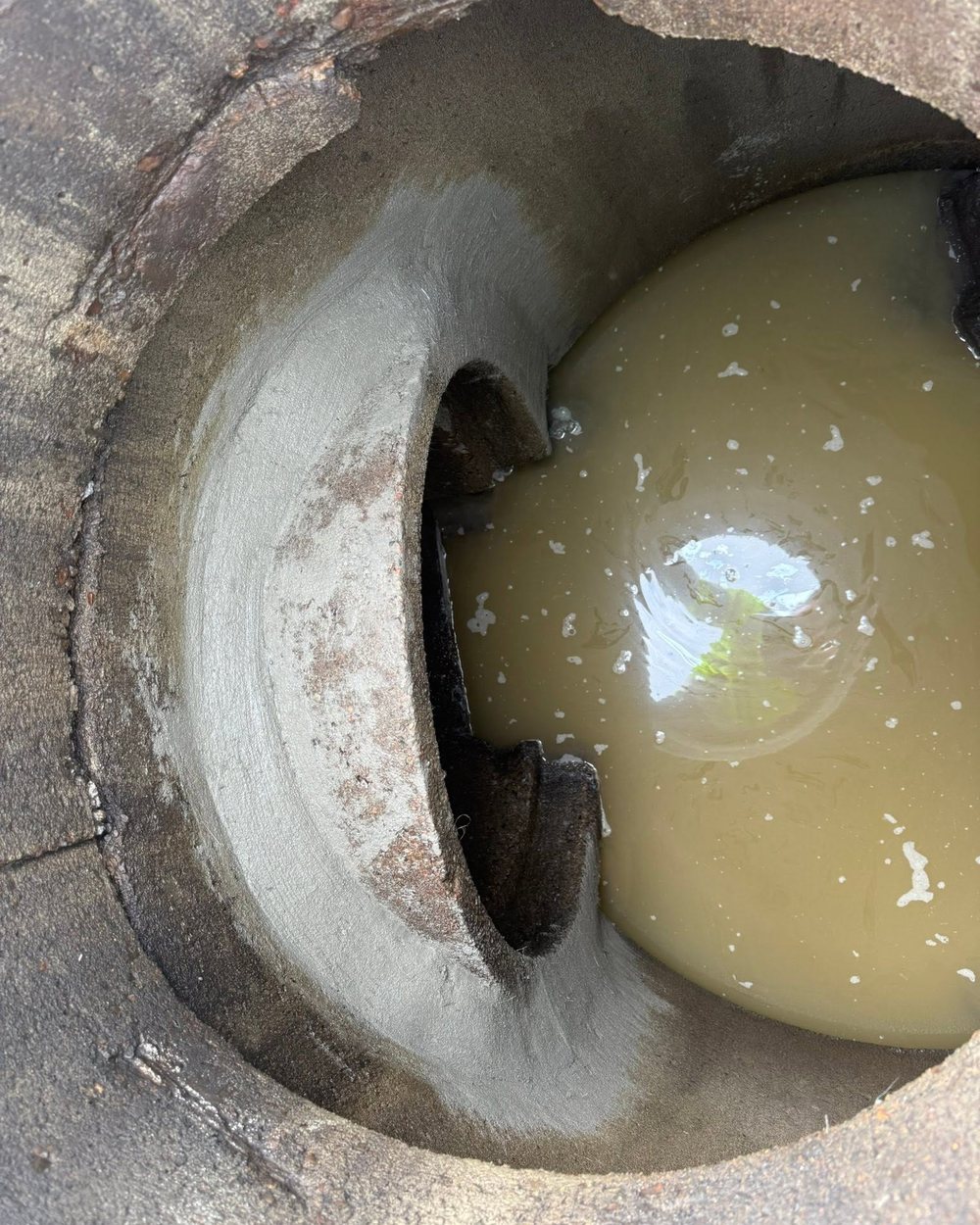
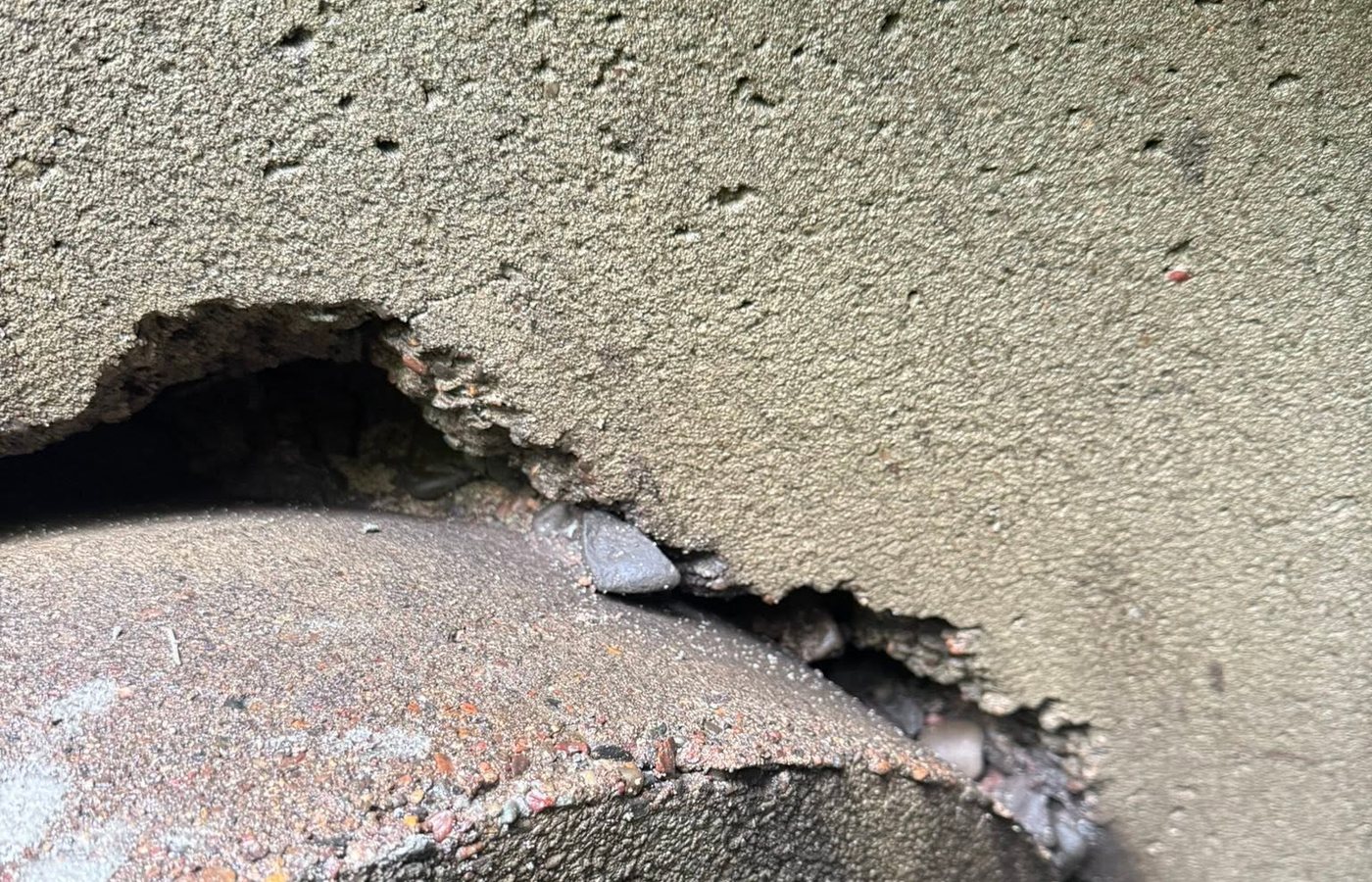
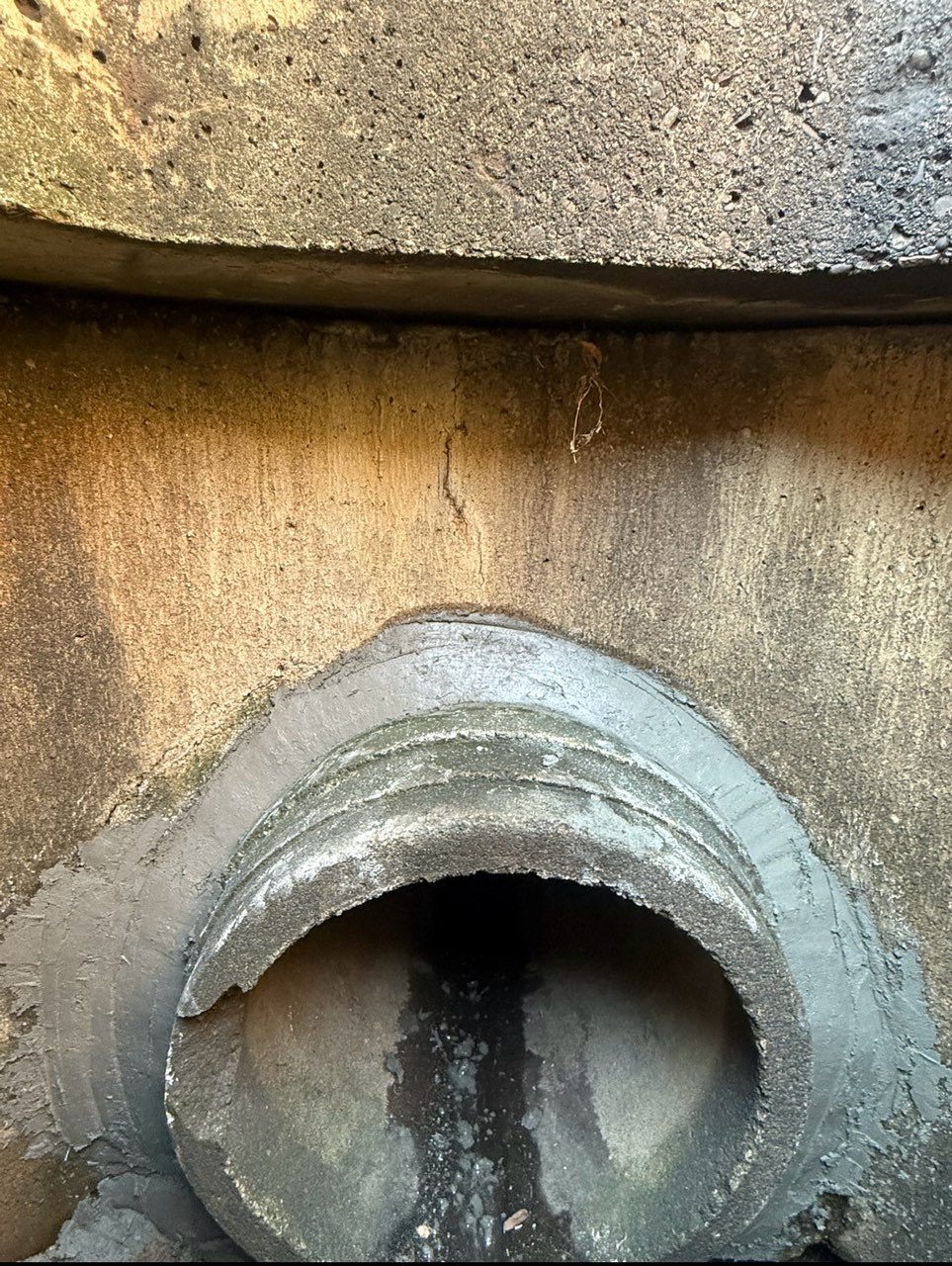
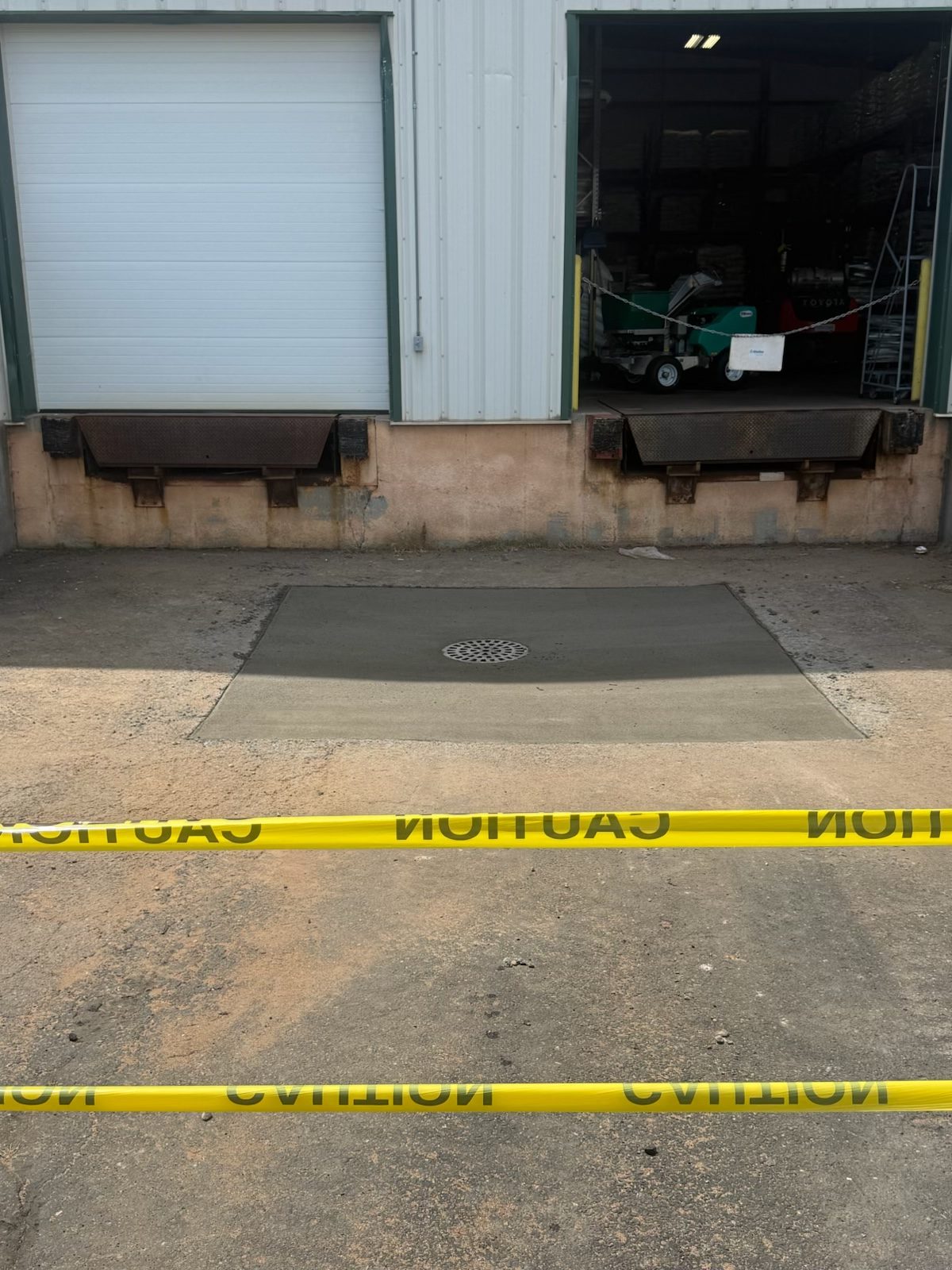
How a catch basin fails
A catch basin is a block or precast box with a cast frame and grate sitting on top of it. Water is supposed to go through the grate and out the pipe. What actually happens over twenty Wisconsin winters is that water gets into the joint between the frame and the structure, freezes, and lifts. Once that joint opens, every rainfall washes a little of the bedding out from under the surrounding asphalt, and the ring of failure spreads outward from the grate a few inches a year. That's why the symptom you notice is never the drain itself. It's the asphalt around it, and by then the structure underneath has usually been moving for years.
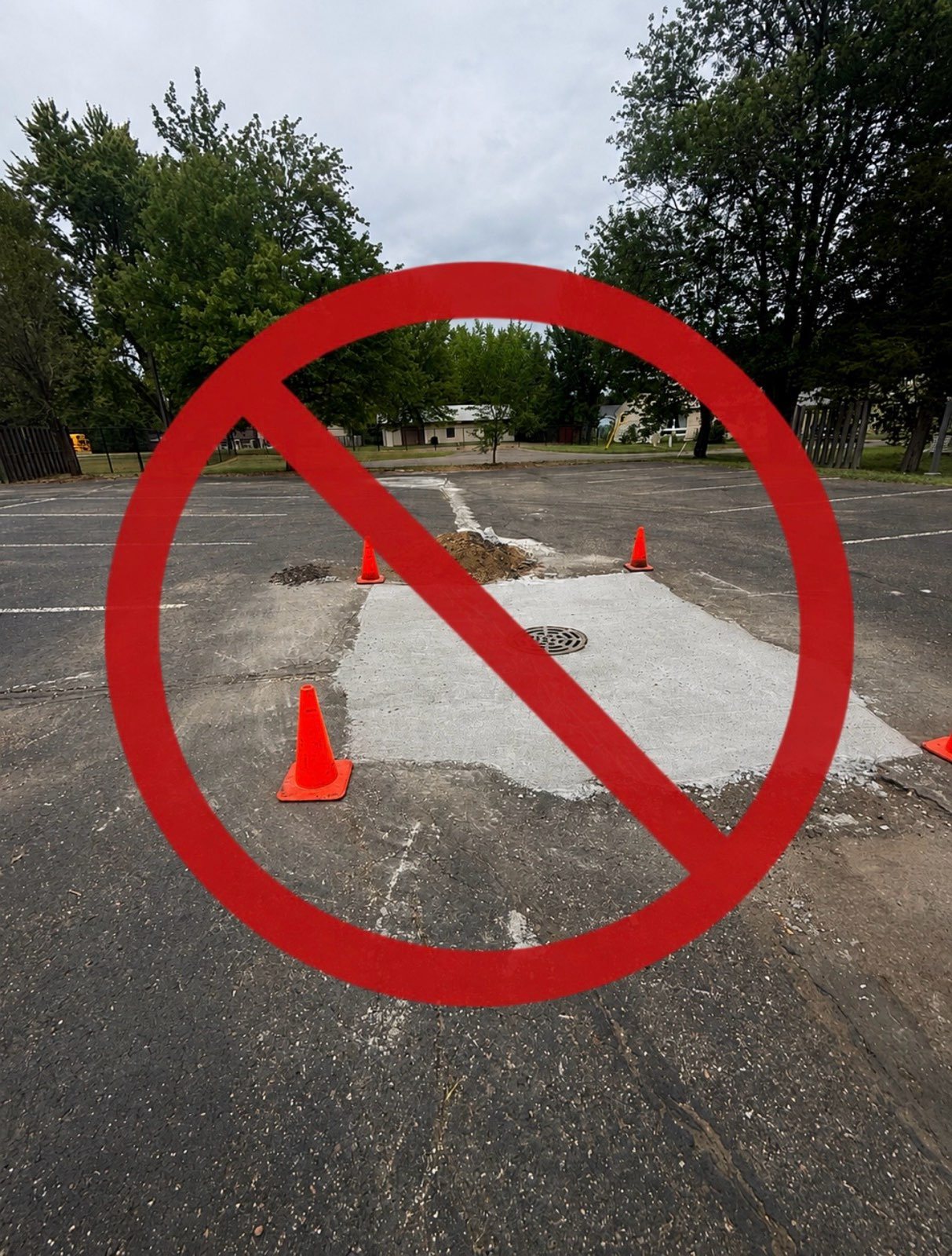
Patching around it
What gets done when the budget is tight
- Cold patch thrown in the dip, gone by spring
- Sealer over the low spot, which changes the color and nothing else
- An overlay that follows the same failing grade back down
- The hole reappears, slightly wider, every year
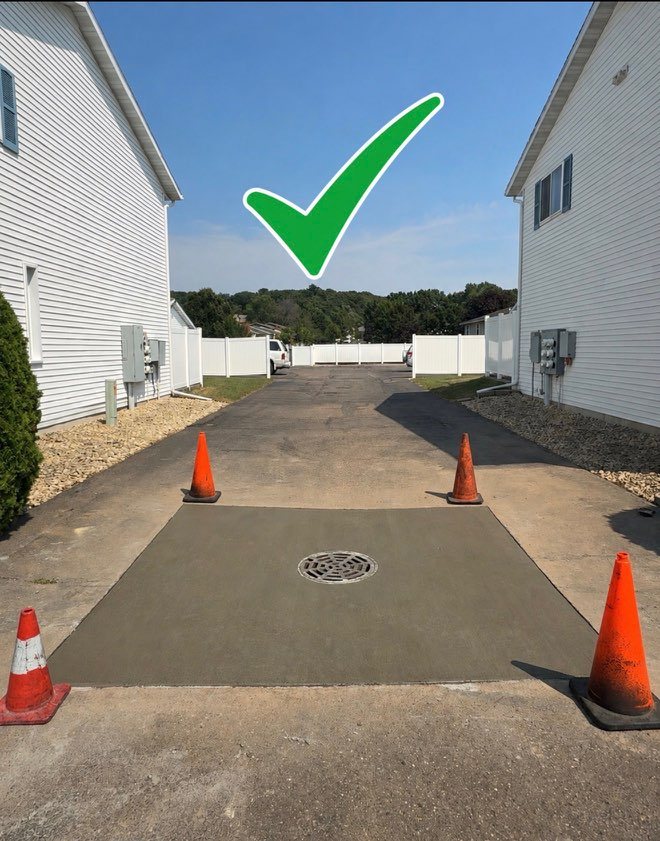
Rebuilding it
What actually stops it
- Saw-cut back to sound asphalt, structure exposed
- Failed block or brick replaced, frame reset to the right grade
- New concrete collar poured around the frame
- Asphalt keyed back in at the correct pitch so water actually reaches the grate
The grade is the part people skip. A basin reset an inch high is a basin that never drains again, and the lot ponds somewhere new.
What Decides the Price in Augusta
It depends almost entirely on what is found once the grate is off, which is why the assessment is free. All three of these cost less than the repaving that follows if the basin is left alone.
Reset
Frame and grate only
Measured on site
- Structure is sound, the frame has settled or lifted
- Saw cut, reset to grade, new collar, asphalt tie-in
Partial rebuild
Top courses replaced
Measured on site
- The common one. Block near the top has deteriorated
- Rebuild the top of the structure, reset, collar, tie-in
Full replacement
Structure down to the pipe
Measured on site
- Structure has failed or the pipe connection has gone
- Deeper excavation, longer, and the only real fix at that point
What moves it: depth, whether the pipe connection is sound, how much asphalt has to come out around it, and whether the lot has to stay open while we work. Multiple basins on one visit come down per basin, because the trip is already paid for.
Reset, rebuild, or replace?
What the symptom usually means
What you can see without lifting the grate, and what it usually turns out to be.
- A shallow dip around the grate, asphalt still soundUsually a reset. The least expensive fix on this list, and the one that gets left too long. Repairable
- Asphalt broken in a ring around it, water ponds after rainThe common case. Partial rebuild, collar, tie in. One to two days. Repairable
- You can see block or brick loose through the grateDepends how far down it goes. This is the one that needs looking at, not quoting blind. Depends, send a photo
- The grate rocks or has dropped below the surface by an inch or moreOften a full rebuild of the upper structure. Sometimes the frame alone. We'll say which. Depends, send a photo
- Water backs up out of it, or drains away far slower than it used toThat's usually the pipe connection, not the box. It needs opening up, and no surface repair touches it. Needs replacement
- A void you can see into, or the ground has dropped beside itMaterial is being washed away underneath. Call it in sooner rather than later; this is the one that turns into a sinkhole and a claim. Needs replacement
Send a photo with the grate visible and we can usually narrow it to two of the three.
How the Work Goes in Augusta
Excavation, block work, concrete and the asphalt tie-in, in the order they happen.
Look at it with the grate off
Most of what's wrong is invisible from above. We lift the grate, look at the structure and the pipe, and tell you which of the three bands you're in.
Saw cut back to sound asphalt
Clean vertical edges, cut wide enough to reach material that hasn't been undermined. Cutting too tight is why repairs fail at their own seam.
Rebuild and set to grade
Failed courses replaced, frame set so the grate sits slightly below the finished surface. Water has to run to it, which means it can't sit level and definitely can't sit proud.
Concrete collar
Poured around the frame to spread the load off the structure and onto the subgrade. This is the part that stops it happening again in five years.
Asphalt back in, compacted, sealed at the joint
Keyed to the cut, compacted in lifts, and the perimeter joint sealed. Then the grade gets checked with water, not by eye.
The ground here is wet. Does that change what we should do?
Can you work the Industrial Drive properties, or is that a different contractor?
Is Augusta far enough out that the drive costs us something?
How much does catch basin repair cost?
How long does a catch basin repair take, and does the lot have to close?
Can you just patch the asphalt around the catch basin instead?
Do you subcontract the excavation or the concrete?
The area around our drain is breaking up. Is that the basin?
Do you do manhole and utility structure work too?
Get a Free Estimate in Augusta
Tell us what it looks like and we'll come measure it. You get a written price before anything starts.
(715) 450-9897- Free on driveways and lots anywhere in the service area
- A photo of the problem helps, and it can go in the message
- Surfaces that are not ready yet get told so at the estimate
Get an estimate
Send the form and we'll call you back. The estimate is free.
Other Work We Do in Augusta
- Sealcoating in Augusta
- Crack Filling and Sealing in Augusta
- Asphalt Repair and Patching in Augusta
- Parking Lot Striping in Augusta
- Track and Athletic Surfaces in Augusta
- Concrete in Augusta
- Asphalt Paving in Augusta
- Commercial Snow Removal in Augusta
Catch Basin Repair in Nearby Towns
- Catch Basin Repair in Osseo
- Catch Basin Repair in Fall Creek
- Catch Basin Repair in Strum
- Catch Basin Repair in Altoona
- Catch Basin Repair in Cadott
- Catch Basin Repair in Eau Claire
Everything about catch basin repair, including how the work goes and what changes the price